Please fill out the form below to request a quote or to request more information about us. please be as detailed as possible in your message, and we will get back to you as soon as possible with a response. we're ready to start working on your new project, contact us now to get started.
Precision Engineering Defined: Inside A Modern Turbocharger Manufacturer's Facility
2026-01-14
YUSEN Power
35
Step inside the cutting-edge world of modern manufacturing as we explore precision engineering at its finest. In this article, “Precision Engineering Defined: Inside a Modern Turbocharger Manufacturer's Facility,” you'll get an exclusive behind-the-scenes look at how advanced technology and meticulous craftsmanship come together to create high-performance turbochargers. Discover the intricate processes, innovative tools, and expert techniques that drive efficiency and quality in this fast-paced industry. Whether you're an engineering enthusiast or simply curious about how these powerful automotive components are made, this inside tour offers fascinating insights you won’t want to miss.
- Understanding Precision Engineering in Turbocharger Production
In the competitive and technically demanding world of automotive manufacturing, turbochargers stand out as one of the most critical components for enhancing engine performance and efficiency. At the heart of producing these complex devices lies the discipline of precision engineering—a field dedicated to achieving extraordinarily tight tolerances and impeccable quality control. For turbocharger manufacturers, harnessing precision engineering is not just a preference; it is an absolute necessity. This article delves into how modern turbocharger makers integrate precision engineering principles within their production processes to deliver reliable, high-performance products.
Turbochargers are intricate assemblies designed to improve a vehicle’s power output by forcing more air into the combustion chamber. This requires components that work in perfect harmony under extreme conditions such as high rotational speeds, significant thermal stresses, and vibration. Precision engineering ensures that every part, from the turbine blades and compressor wheels to the shaft and housing, meets exact specifications with micron-level accuracy. Any minor deviation can lead to inefficient performance or even catastrophic failure.
One of the most critical aspects of precision engineering in turbocharger production is material selection combined with advanced manufacturing techniques. Turbocharger makers rely heavily on specialized alloys known for their strength, heat resistance, and lightweight properties. For example, turbine wheels are often made from Inconel, a nickel-chromium-based superalloy that withstands temperatures exceeding 1,000°C. Producing components from such materials involves processes like CNC (Computer Numerical Control) machining, electrical discharge machining (EDM), and precision casting. Each of these techniques allows manufacturers to create parts with complex geometries—the blade curves and internal channels—that traditional manufacturing methods cannot achieve with required accuracy.
The machining of turbocharger components demands an extraordinary level of precision in order to maintain balance and rotational stability at speeds that can exceed 250,000 RPM. Turbocharger manufacturers implement strict quality controls utilizing Coordinate Measuring Machines (CMM) and laser scanning technologies to check dimensions and detect microscopic flaws. Advanced metrology tools ensure strict adherence to tolerances often measured in microns (one-thousandth of a millimeter). Such scrutiny helps prevent vibration imbalances that could otherwise compromise engine performance or shorten the turbocharger’s lifespan.
Assembly itself is a testament to precision engineering. Turbocharger makers organize clean-room environments where skilled technicians use calibrated torque tools and specialized jigs to ensure consistent assembly of the shaft, compressor wheel, and turbine wheel. Even the smallest misalignment can cause friction or wear, so precision at this stage is critical. Some manufacturers also employ automated assembly lines supplemented with robotic arms that apply exacting force and positioning, reducing human error and improving repeatability.
Another vital dimension of precision engineering in turbocharger manufacturing is the rigorous testing phase. Once assembled, turbochargers undergo a series of performance tests that simulate real-world operating conditions. Test rigs measure boost pressure, efficiency, shaft speed, and thermal tolerance. Data from these tests informs iterative improvements, highlighting how precision engineering does not end with manufacturing; it extends to continuous feedback loops that enhance design, materials, and production methods.
The integration of digital tools such as Computer-Aided Design (CAD) and Computer-Aided Manufacturing (CAM) further empowers turbocharger makers to innovate and maintain tight tolerances. CAD software helps design components with exact specifications well before fabrication begins, while CAM software translates those designs into machine instructions, ensuring consistent production quality. Some manufacturers incorporate simulation software to analyze fluid dynamics inside the turbocharger, optimizing air flow and heat exchange for maximal efficiency before any physical component is made.
From the raw material stage to final testing, every phase in turbocharger production reflects the essence of precision engineering. It is a multidisciplinary effort blending metallurgy, advanced manufacturing, robotics, and quality assurance. Turbocharger manufacturers that excel in these areas are able to produce units that not only boost engine power but also maintain reliability under punishing driving conditions. This meticulous approach differentiates leading turbocharger makers in a market where performance and durability are non-negotiable.
In conclusion, understanding precision engineering within the context of turbocharger production reveals a complex ballet of technology, craftsmanship, and innovation. Turbocharger manufacturers who master these techniques ensure that their products deliver the superior performance and longevity that modern engines demand.
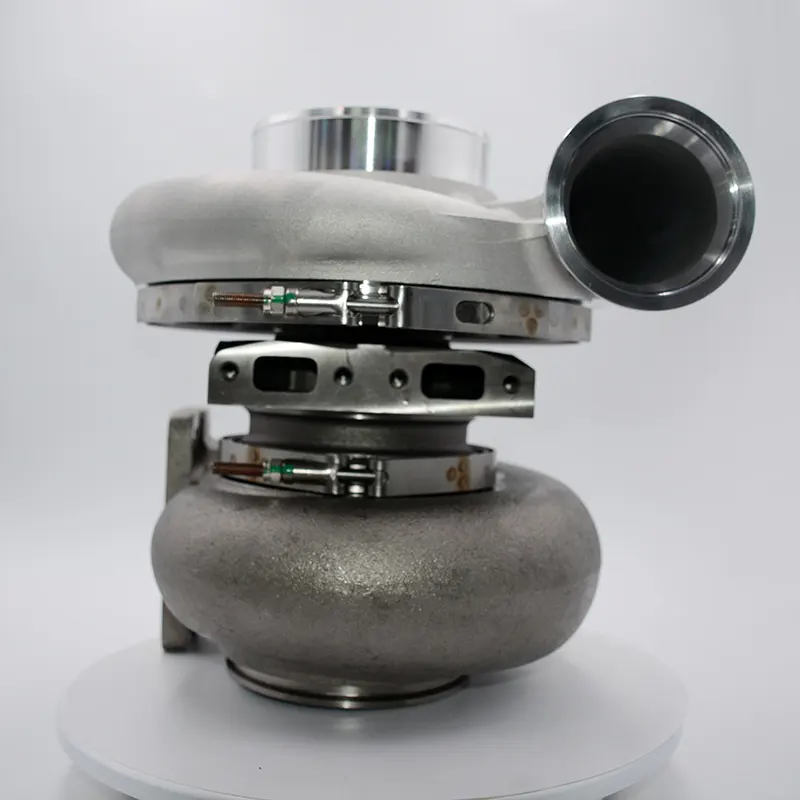
- Key Technologies Driving Modern Turbocharger Manufacturing
In the rapidly evolving landscape of automotive and industrial machinery, turbocharger manufacturers are at the forefront of integrating cutting-edge technologies to meet increasing demands for performance, efficiency, and reliability. Modern turbocharger makers leverage a sophisticated blend of precision engineering, advanced materials science, and state-of-the-art manufacturing processes to produce components that not only enhance engine output but also contribute to stricter environmental standards. Inside a contemporary turbocharger manufacturer’s facility, several key technologies stand out as foundational pillars driving this industrial revolution.
One of the primary technologies transforming turbocharger manufacturing is **Computer Numerical Control (CNC) machining**. CNC machines offer unparalleled precision and repeatability in the fabrication of critical turbocharger components such as turbine wheels, compressor housings, and center housings. High-speed CNC milling and turning centers enable manufacturers to achieve micrometer-level tolerances, which are essential for the intricate aerodynamic profiles that turbochargers require. The ability to produce complex geometries with consistent quality reduces waste and ensures the performance characteristics predicted in design software translate into the final product.
Complementing CNC machining is the use of **advanced computer-aided design (CAD) and computer-aided manufacturing (CAM) software**. Turbocharger makers routinely employ simulation tools that integrate fluid dynamics (CFD) and finite element analysis (FEA) to optimize component shapes before beginning production. These simulations help engineers predict the behavior of the turbo’s impeller and turbine wheels under extreme conditions, such as high rotational speeds exceeding 100,000 revolutions per minute. This digital validation reduces the need for multiple physical prototypes, accelerating development cycles and minimizing costs.
Materials technology represents another cornerstone of modern turbocharger manufacturing. Innovations in **high-temperature alloys and ceramic matrix composites (CMCs)** have allowed turbocharger makers to push operating temperature thresholds far beyond conventional limits. Components like turbine wheels and housings increasingly incorporate nickel-based superalloys and CMCs, both of which offer exceptional strength-to-weight ratios and resistance to thermal fatigue. Laser-based additive manufacturing (3D printing) facilitates the production of complex turbine geometries using these advanced materials, further enhancing performance while optimizing material use.
In addition to materials and machining, **precision balancing technologies** play a critical role in ensuring turbocharger reliability and longevity. Modern balancing machines utilize high-sensitivity sensors and sophisticated software algorithms to detect minute variances in mass distribution. This is vital because even the smallest imbalance at the high rotational speeds typical of turbochargers can lead to catastrophic failure. By achieving near-perfect balance, turbocharger makers safeguard components from excessive vibration and reduce wear on bearings and seals.
Another key technology is **automated inspection and quality control systems** that leverage optical and laser scanning techniques. Inline metrology systems scan each part during the production process, comparing the actual dimensions against the digital model in real time. This immediate feedback loop allows for rapid corrective actions, reducing scrap rates and enhancing overall product quality. Machine vision combined with artificial intelligence further supports defect detection, enabling turbocharger manufacturers to maintain stringent ISO and automotive industry standards.
The integration of **Industry 4.0 principles** further revolutionizes turbocharger manufacturing. Intelligent sensors embedded within manufacturing equipment collect comprehensive data on machine performance, environmental conditions, and process parameters. This data is transmitted to centralized manufacturing execution systems (MES) and analyzed using machine learning algorithms to predict equipment maintenance needs, optimize process flows, and improve yield. Such smart manufacturing ensures turbocharger makers minimize downtime while maintaining consistent quality.
Furthermore, the advent of **robotic automation** contributes significantly to the efficiency and precision within a turbocharger factory. Robots handle repetitive and high-precision tasks such as assembly, welding, and surface finishing. Collaborative robots (cobots) now work alongside human operators, enhancing safety and ergonomics while maintaining the flexibility needed for various turbocharger models and sizes. Automation also speeds up production cycles, helping turbocharger manufacturers meet tight delivery schedules demanded by automotive and aftermarket clients.
Lastly, the adoption of **environmentally sustainable manufacturing practices** is becoming increasingly important for turbocharger makers. Advanced coating technologies, dry machining processes, and energy-efficient equipment reduce environmental impact. Many facilities incorporate waste heat recovery systems and renewable energy sources to lower the carbon footprint associated with high-energy manufacturing operations.
By harnessing these key technologies, modern turbocharger manufacturers continually push the boundaries of what is possible in engine performance enhancement. The fusion of precision engineering, innovative materials, automated quality control, and smart manufacturing not only helps turbocharger makers optimize every aspect of production but also ensures the delivery of highly reliable, efficient, and environmentally friendly turbochargers to the global market.
- The Role of Quality Control in Ensuring Performance and Reliability
**- The Role of Quality Control in Ensuring Performance and Reliability**
In the highly competitive and technically demanding world of turbocharger manufacturing, the role of quality control cannot be overstated. Turbocharger manufacturers and turbocharger makers operate in an industry where precision, durability, and efficiency are paramount. Each component within a turbocharger must meet exacting standards to deliver optimal performance and reliability under strenuous operating conditions. Quality control serves as the backbone of this mission, safeguarding the integrity of every product before it reaches the market and ultimately the engine it is designed to enhance.
Within a modern turbocharger manufacturer’s facility, quality control processes are integrated into every stage of production, from raw material inspection to final assembly and testing. These processes begin with stringent supplier selection and incoming material verification. Turbocharger makers demand materials that conform to tight specifications, as subpar raw materials can compromise the component’s strength and heat resistance—both critical properties given the turbocharger’s exposure to extreme temperatures and pressures. Advanced non-destructive testing (NDT) methods and material composition analyses ensure that only the best-quality base materials enter the production line.
As components such as turbine wheels, compressor wheels, center housings, and bearing systems are manufactured, in-line inspection technologies are used extensively. Coordinate Measuring Machines (CMMs), laser scanning, and optical comparators provide precise dimensional measurements, verifying that every piece adheres to design tolerances often in the micrometer range. Because turbocharger performance hinges on aerodynamic efficiency and minimal clearance between parts, even the slightest deviation can cause vibrations, premature wear, or energy losses. Turbocharger makers invest heavily in metrology equipment and automated inspection robots that execute these quality control checks rapidly and with greater repeatability than manual measurements.
Beyond physical dimensions, surface quality and balance are equally critical in quality control. Surface finishes affect airflow dynamics and component longevity, so turbocharger manufacturers conduct rigorous surface roughness testing and microscopic examination to detect manufacturing defects such as cracks, burrs, or pits. After assembly, dynamic balancing procedures ensure that rotating assemblies can withstand operating speeds exceeding 200,000 RPM without inducing harmful vibrations. Balance tolerances at this level are extremely tight, often in the range of fractions of a gram centimeter, and achieving them requires both precision engineering and comprehensive quality verification.
The quality control process within turbocharger manufacturing also extends to performance validation. Test benches equipped with sensors replicate real-world working conditions, enabling turbocharger makers to measure parameters such as boost pressure, response time, thermal stability, and mechanical endurance. Data gathered during these performance tests is analyzed through advanced software systems, helping engineers identify any deviations from expected operating metrics and pinpoint underlying causes. Incorporating feedback loops between testing and production ensures that quality control does not merely reject faulty products but continually improves manufacturing processes.
Perhaps one of the most crucial aspects of quality control in a modern turbocharger manufacturer’s plant is traceability and documentation. Each turbocharger unit carries unique identifiers linked to its production journey, including batch numbers, test results, and inspection records. This traceability allows turbocharger makers to quickly respond to any quality-related issues in the field, initiating targeted recalls or service interventions while maintaining regulatory compliance. Moreover, detailed records enable process optimization on the factory floor, as quality data trends may inform proactive maintenance schedules or equipment upgrades.
In recent years, the integration of Industry 4.0 concepts such as the Internet of Things (IoT), artificial intelligence (AI), and machine learning has revolutionized quality control for turbocharger manufacturers. Smart sensors installed along production lines collect real-time data that feeds into AI-driven analytics platforms. These platforms can detect anomalies earlier than traditional inspection techniques and recommend corrective actions swiftly, reducing downtime and scrap rates. Such innovations further elevate the reliability and performance standards of turbochargers emerging from modern manufacturing facilities.
In essence, quality control shapes the entire lifecycle of turbochargers produced by today’s leading turbocharger makers. It ensures that each unit meets the rigorous demands of automotive, aerospace, and industrial applications, where failure is not an option. By embedding quality assurance into every phase—from materials and machining to assembly and testing—turbocharger manufacturers guarantee that their products deliver the power boost and durability that end users expect, setting new benchmarks for precision engineering excellence.
- Navigating the Manufacturing Process: From Design to Assembly
**Navigating the Manufacturing Process: From Design to Assembly**
In the realm of modern automotive engineering, turbochargers play a pivotal role in enhancing engine performance and efficiency. At the heart of this innovation lies precision engineering, where turbocharger manufacturers transform intricate designs into high-performance components through a meticulous manufacturing process. Understanding the journey from design to assembly sheds light on the sophistication and expertise required by turbocharger makers to deliver products that meet stringent industry standards.
The manufacturing process begins with the design phase, where engineers leverage advanced computer-aided design (CAD) software to create detailed blueprints of each turbocharger component. This step is critical as it dictates the functionality, durability, and performance of the final product. Turbocharger manufacturers must consider factors such as airflow dynamics, thermal stress, and material selection during design to ensure the turbocharger operates efficiently under extreme conditions. Collaborative input from research and development teams, alongside feedback from automotive clients, often guides iterative refinements to optimize each design before production begins.
Once the design is finalized, the process moves into prototyping and testing. Precision turbocharger makers employ rapid prototyping technologies to produce initial models. These prototypes undergo rigorous bench testing to simulate real-world operating environments. Engineers analyze parameters such as boost pressure, rotational speed, and thermal stability, identifying any potential flaws or weaknesses. This stage is crucial for ensuring that each design meets the high-performance expectations and safety standards demanded in the automotive industry.
Following successful prototype validation, the manufacturing process proceeds to the machining and component fabrication stages. Turbocharger manufacturers utilize advanced CNC (Computer Numerical Control) machines to achieve the tight tolerances needed for components like the turbine wheel, compressor wheel, and housing. Precision machining guarantees that each part fits seamlessly together, reducing friction and maximizing efficiency. Materials such as high-grade alloys and heat-resistant composites are selected carefully to withstand high temperatures and mechanical stresses characteristic of turbocharger operation.
In parallel with machining, quality control inspections are embedded throughout the manufacturing line. Hardness tests, dimensional verification, and surface finish examinations ensure that every part adheres to specifications. Many turbocharger makers also employ coordinate measuring machines (CMM) and laser scanning technologies to verify component accuracy on a microscopic scale. This commitment to precision minimizes the risk of defects and enhances the overall reliability of the turbocharger.
The assembly phase is where the turbocharger begins to take tangible form. Skilled technicians assemble subcomponents in cleanroom environments to prevent contamination. Bearings, seals, and housings are carefully integrated, and the turbine and compressor wheels are balanced to reduce vibrations during operation. Balancing is a critical step that extends the life span of the turbocharger and ensures smooth engine performance. Throughout assembly, continuous quality checks are performed, including dynamic testing where assembled turbochargers are spun at high speeds to validate balance and functionality.
In addition to mechanical assembly, modern turbocharger manufacturers are embracing automation and robotics to improve consistency and throughput. Robotic arms can handle delicate components with precision and speed, reducing human error and increasing production efficiency. Meanwhile, data from each production stage is collected and analyzed through Manufacturing Execution Systems (MES), providing real-time monitoring and traceability that turbocharger makers use to maintain high standards and identify areas for improvement.
Finally, before shipment, assembled turbochargers undergo final quality assurance testing. This includes pressure testing, leak detection, and performance validation under simulated engine conditions. Only units that pass these stringent checks are packaged and delivered to customers, ready to enhance engine efficiency and power across a range of automotive applications.
Navigating the manufacturing process from design to assembly reveals the intricate craftsmanship and technological innovation that define a leading turbocharger manufacturer. The blend of advanced engineering, rigorous testing, precision machining, and meticulous assembly underscores why turbocharger makers remain indispensable partners in the evolution of automotive performance.
- Innovations Shaping the Future of Turbocharger Engineering
**Innovations Shaping the Future of Turbocharger Engineering**
In the rapidly evolving world of automotive technology, turbocharger manufacturers are at the forefront of a dynamic transformation. As turbocharger makers strive to meet the rising demands for greater engine efficiency, reduced emissions, and enhanced performance, the innovations emerging within modern turbocharger engineering are nothing short of revolutionary. These groundbreaking advances not only redefine the capabilities of turbochargers but also highlight the precision engineering excellence embodied by today’s leading manufacturers.
At the heart of this wave of innovation is the integration of advanced materials science. Turbocharger manufacturers are increasingly adopting lightweight, heat-resistant materials such as titanium aluminides and ceramic matrix composites (CMCs) to replace traditional metals in turbo housings and turbine wheels. These next-generation materials allow turbochargers to operate at significantly higher temperatures and rotational speeds, pushing engine performance boundaries without compromising durability. By doing so, turbocharger makers ensure that their products not only enhance power output but also contribute to improved fuel efficiency and stringent emissions standards compliance.
Another defining innovation shaping turbocharger engineering lies in the development of sophisticated aerodynamic designs and computational fluid dynamics (CFD) modeling techniques. Modern turbocharger manufacturers utilize cutting-edge simulation tools to optimize turbine and compressor blade geometry with unparalleled precision. This meticulous engineering improves air flow dynamics through the turbocharger system, thereby maximizing boost pressure and minimizing turbo lag. The result is a turbocharger that delivers faster throttle response and smoother power delivery—qualities highly prized by both performance enthusiasts and everyday drivers alike.
Furthermore, the rise of electrification has profoundly impacted turbocharger design philosophy. Among turbocharger makers, the advent of electric turbochargers (e-turbos) signifies a monumental shift towards hybrid and fully electric powertrains. Equipped with an integrated electric motor, these turbochargers can spool up independently of exhaust gas flow, virtually eliminating turbo lag and providing immediate boost on demand. This innovation is spearheaded by turbocharger manufacturers committed to blending traditional forced induction benefits with the responsiveness and efficiency demands of modern electric vehicles.
The manufacturing facility of a leading turbocharger maker reveals how these innovations are translated into precision-engineered products through exemplary production techniques. Automated CNC machining centers, laser-based quality inspection systems, and state-of-the-art balancing machines work in concert to achieve micrometer-level tolerances in every turbocharger component. Real-time process monitoring and digital twin technology enable manufacturers to maintain consistent quality and rapidly iterate product designs in response to dynamic market requirements. This blend of advanced engineering and precision manufacturing cements the position of contemporary turbocharger manufacturers at the cutting edge of automotive technology.
Moreover, turbocharger makers are increasingly adopting additive manufacturing (3D printing) for prototyping and even low-volume production of intricate components. This approach allows for rapid innovation cycles, enabling manufacturers to test and implement novel designs that were once too complex or costly to produce using conventional methods. Additive manufacturing also supports weight reduction initiatives by creating optimized component structures that maintain strength while reducing material usage. As a result, turbocharger manufacturers can innovate faster and deliver more efficient, environmentally friendly products to the market.
In parallel with hardware advancements, the integration of smart sensors and IoT technologies is shaping the future of turbocharger engineering. Leading turbocharger manufacturers embed miniaturized sensors within turbo components to monitor temperature, pressure, vibration, and rotational speed in real time. Data generated by these sensors not only improves reliability through proactive maintenance alerts but also enables adaptive control algorithms to optimize turbocharger performance dynamically depending on driving conditions. Such intelligent turbochargers represent a significant leap forward in precision engineering, where mechanical prowess intersects with digital innovation.
In conclusion, the future of turbocharger engineering is being reshaped by a convergence of material science breakthroughs, aerodynamics optimization, electrification, advanced manufacturing, and smart sensor integration. Turbocharger manufacturers and turbocharger makers driving these innovations are enabling powertrains that are cleaner, more efficient, and more responsive than ever before. Within state-of-the-art production facilities, these advancements come to life through meticulous precision engineering, putting today’s turbocharger manufacturers in an unparalleled position to meet the evolving challenges of the automotive industry.
Conclusion
In conclusion, precision engineering lies at the very heart of modern turbocharger manufacturing, where meticulous attention to detail and cutting-edge technology come together to create components that drive performance and reliability. With nearly a decade of experience in the industry, our company has witnessed firsthand how innovation and skilled craftsmanship transform complex designs into high-quality turbochargers that meet the ever-evolving demands of today’s automotive world. As we continue to push the boundaries of precision and efficiency, we remain committed to delivering excellence from our facility to your engine, fueling a future powered by engineering mastery.
Table of Contents
GET IN TOUCH WITH Us
Professional manufacturer of turbochargers and components used for diesel, natural gas engines & engineering machinery.
Useful Links
Products
Contact Us
Add: NO.1060, Antaisan Rd, Houqiao Street, Xishan District, Wuxi, Jiangsu, China