Please fill out the form below to request a quote or to request more information about us. please be as detailed as possible in your message, and we will get back to you as soon as possible with a response. we're ready to start working on your new project, contact us now to get started.
Unlocking Hidden Power: The Art And Science Of Porting & Polishing Turbo Exhaust Housings
2026-01-22
YUSEN Power
58
Understanding the Role of Turbo Exhaust Housings in Engine Performance
In the world of turbocharged engines, the turbo exhaust housing — often referred to as the turbine housing — plays a crucial yet frequently underappreciated role in overall engine performance. It is the key component that directs exhaust gases from the engine’s cylinders to the turbine wheel, initiating the turbocharging process by spinning the turbine and subsequently compressing intake air. A deep understanding of turbo exhaust housings, especially in the context of ported turbine housing, porting turbo exhaust housing, and custom turbine housing, is essential for enthusiasts and engineers aiming to unlock hidden power from their turbo systems.
At the heart of this lies the concept of the turbo exhaust housing’s design. The housing’s shape, volume, and internal surface finish profoundly influence how efficiently exhaust gases drive the turbine wheel. The faster and more effectively exhaust gases can flow into and through the turbine housing, the quicker the turbocharger spools, reducing turbo lag and increasing boost pressure. Consequently, the turbine housing directly affects engine responsiveness, power output, and even fuel efficiency.
A standard cast turbine housing is manufactured with certain compromises balanced toward mass production, durability, and broad compatibility. However, these housings are rarely optimized for maximum flow or minimum restriction. In many cases, the internal casting contains unnecessary roughness, uneven surfaces, or abrupt flow transitions that hinder smooth exhaust gas flow. This is where the art and science of porting turbo exhaust housings come into focus.
**Ported Turbine Housing: Enhancing Flow Dynamics**
Porting a turbine housing involves meticulously grinding and smoothing the internal surfaces of the housing’s volute (the spiral chamber around the turbine wheel) to improve exhaust gas flow characteristics. By removing casting imperfections, smoothing sharp edges, and reshaping flow paths, a ported turbine housing minimizes turbulence and pressure drop within the housing. These modifications can significantly improve turbine efficiency by allowing exhaust gases to maintain higher velocity and a more direct path to the turbine blades.
The benefits of porting turbo exhaust housing extend beyond just improved flow. Ported turbine housings often allow the turbocharger to spool earlier and maintain higher boost levels across the RPM range. This translates to better throttle response, higher horsepower, and improved torque delivery, particularly noticeable in mid to high engine speeds. For daily drivers and race applications alike, these improvements can mean more usable power and a more engaging driving experience.
**Porting Turbo Exhaust Housing: Technical Considerations**
Porting turbo exhaust housing is not a trivial task; it requires precise knowledge of fluid dynamics, turbine geometry, and meticulous workmanship. Incorrect porting can lead to uneven flow distribution, which may cause turbine imbalance or damage. Therefore, professional porting services use specialized tools, flow benches, and sometimes 3D modeling to customize the housing’s internal profile.
Moreover, porting turbo exhaust housing is often paired with polishing — the process of further smoothing the turbine housing’s surface to reduce friction and improve heat dissipation. Polished housings help maintain cleanliness in the flow path and reduce the risk of heat buildup, which is critical in high-performance or continuous-duty environments.
**Custom Turbine Housing: Tailoring for Performance**
While ported turbine housings represent modifications to off-the-shelf castings, custom turbine housings are built from the ground up or heavily modified to precisely match a specific engine’s exhaust flow characteristics and performance goals. Custom turbine housings may involve altering the housing’s size, A/R (area/radius ratio), shape of the volute, and outlet diameter. These tailored housings are designed to maximize the efficiency of the turbocharger within the context of a given engine, fuel type, and intended use, whether it be drag racing, drifting, or highway cruising.
A custom turbine housing combined with porting and polishing can unlock levels of power and efficiency unattainable by stock or even merely ported housings. These custom housings are often fabricated from higher-grade materials or use lightweight designs to improve durability and thermal management. The ability to design a housing with exact flow paths optimized for the turbine wheel geometry and engine exhaust pulses leads to a more responsive turbocharger and ultimately a more powerful and efficient engine.
**Bridging Science and Craftsmanship**
Unlocking hidden power in turbocharged engines through the art and science of porting and polishing turbo exhaust housings represents an intricate balance of engineering knowledge and skilled craftsmanship. Whether opting for a ported turbine housing or investing in a custom turbine housing built to precise specifications, the results speak for themselves. Improved spool characteristics, reduced turbo lag, enhanced power output, and better overall engine performance all stem from a deeper appreciation of the turbine housing’s critical role in the turbo system.
By focusing on optimizing the exhaust flow through the turbine housing, enthusiasts and professionals alike can achieve substantial performance gains that elevate the driving experience without necessarily increasing boost pressure or adding other hardware. In essence, understanding and applying porting turbo exhaust housing techniques unlocks the hidden potential of the turbo system, driving innovation in engine tuning and turbocharger technology.
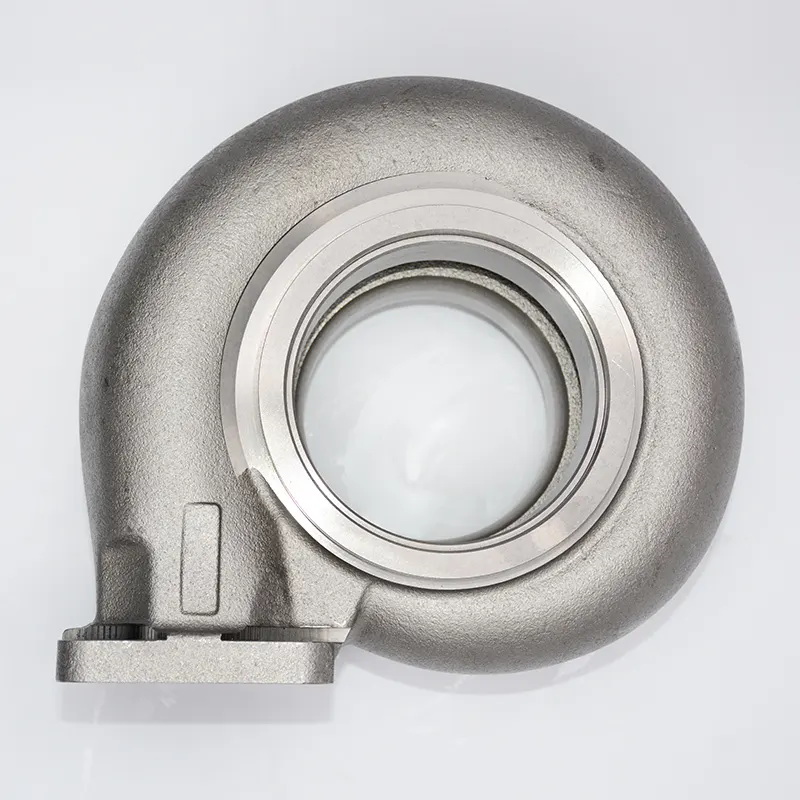
The Science Behind Porting: Enhancing Airflow Efficiency
In the realm of turbocharging, the seemingly subtle modifications to the turbo exhaust housing can yield remarkable improvements in engine performance. Central to this process is the technique known as porting, which involves carefully reshaping and smoothing the internal passages of a turbine housing to optimize the flow of exhaust gases. Understanding the science behind porting is essential for grasping how it enhances airflow efficiency and ultimately unlocks hidden power in turbocharged engines.
At its core, a turbocharger relies on the rapid and efficient movement of exhaust gases through the turbine housing to spin the turbine wheel, which drives the compressor and boosts engine intake pressure. The turbine housing’s shape and surface finish significantly affect how exhaust gases behave as they enter and pass through the turbine. Stock turbo housings often feature casting imperfections, sharp edges, and flow-restrictive contours intended for mass production tolerances rather than peak performance. These shortcomings can cause turbulence, flow separation, and pressure drops that reduce turbine efficiency.
Porting the turbo exhaust housing consists of painstakingly smoothing out and reshaping these imperfections. This process removes casting flash, sharp edges, and surface roughness—elements that create micro-turbulence and impede smooth airflow. By hand or with specialized tools, technicians enlarge and contour the volute (the snail-shell shaped passage) and the turbine inlet flange to promote a more uniform velocity profile of the exhaust gases. This improved flow condition reduces the energy lost to friction and turbulence, allowing a greater volume of exhaust gases to reach the turbine wheel more efficiently.
One of the most critical aspects in porting a turbine housing is balancing airflow gains with backpressure management. Excessive modification can reduce exhaust backpressure too much, potentially impairing low-end torque and drivability. That is why custom turbine housing porting is often tailored specifically to the engine’s characteristics, intended use, and turbo size. Custom ported turbine housings ensure that the flow capacity is increased without sacrificing the velocity needed for quick spool-up and responsive throttle performance. This balance is achieved through precise measurements, flow bench testing, and computer simulations that analyze fluid dynamics within the housing.
Another factor contributing to airflow efficiency is the polishing element often performed alongside porting. After reshaping, the internal surfaces of the turbine housing can be polished to a mirror-like finish. This smoothing process minimizes surface roughness, reducing skin friction and preventing exhaust gas boundary-layer separation, which helps maintain laminar flow over the housing walls. Although the gains from polishing alone are marginal compared to porting, it serves as a complementary enhancement that contributes to reducing energy losses.
Ported turbine housings offer several practical benefits for modern turbocharged applications. The improved gas flow characteristics can translate into faster turbo spool-up, increased peak boost levels, and enhanced overall power output. For engines tuned for high-performance or racing use, the custom turbine housing porting allows more precise tuning of the turbocharger’s response curve, enabling more predictable and controllable boost delivery. Additionally, the reduced turbulence and smoother flow prevent hot spots within the housing, promoting longer component life and reliability under extreme operating conditions.
Furthermore, advances in computational fluid dynamics (CFD) modeling have significantly refined porting techniques. Engineers and turbo specialists now use these advanced tools to simulate exhaust flow pathways and test porting designs virtually before physical modifications. This scientific approach has elevated porting from a purely artistic craft to a precise engineering discipline focused on optimizing the aerodynamic and thermodynamic functions of the turbo exhaust housing.
In essence, porting turbo exhaust housing is a confluence of art and science—where skilled craftsmanship meets aerodynamic engineering. Through custom turbine housing approaches, the internal shape and finish of the turbine housing are meticulously optimized, significantly enhancing airflow efficiency. The outcome is a more responsive, powerful, and reliable turbocharger setup capable of extracting hidden potential from existing hardware while paving the way for higher performance ceilings. Understanding and applying the science behind porting ensures that enthusiasts and professionals alike can unlock new levels of turbocharged engine performance through refined airflow management.
Mastering the Art of Polishing for Optimal Turbo Response
In the realm of forced induction tuning, the performance gains achieved through porting and polishing turbo exhaust housings are often underestimated or misunderstood. While the concept of a “Ported Turbine Housing” may sound straightforward, the process of achieving an optimized flow path is both a science and an art. Polishing plays a crucial role in maximizing turbocharger efficiency, improving spool times, and ultimately unlocking hidden power within your engine’s forced induction system.
A ported turbine housing essentially refers to the modification of the internal gas flow pathways of the turbocharger’s turbine side — the exhaust housing — to reduce flow restrictions. Typically, this involves reshaping, enlarging, or smoothing the turbine passages, which facilitates smoother and faster evacuation of exhaust gases. However, the act of porting alone will not guarantee improved turbo response unless it is complemented by meticulous polishing. This step eliminates microscopic roughness and turbulence that naturally occur within cast turbo exhaust housings.
When a turbo spool-up is sluggish, it is often due to turbulent exhaust flow causing energy losses before the turbine wheel. The traditional cast texture of the exhaust housing creates surface imperfections, micro ridges, and pits that disrupt the exhaust gas flow’s laminar pattern. By engaging in proper polishing techniques, tuners and fabricators are able to create an ultra-smooth passage for gases to flow efficiently. This means exhaust pulses hit the turbine wheel blades with greater velocity and less energy dissipation. The effect: a noticeably quicker spool time and stronger, more consistent boost pressure.
Custom turbine housing builds, especially those labeled “Custom Turbine Housing,” take this a step further by precisely tailoring the turbine passage geometry and surface finish to match a vehicle’s specific exhaust characteristics and power goals. Such customizations include adjusting the A/R ratio, changing nozzle size, and thorough porting of the turbine inlet tract — all polished to an immaculate finish. This synergy between optimized porting and polishing not only enhances turbo response but also extends the turbocharger’s lifespan by reducing strain and uneven gas flow forces on the turbine wheel.
Porting turbo exhaust housing requires fine skill and experience, as incorrect material removal or improper polishing can ruin the balance of exhaust flow or even weaken housing integrity. Professionals often utilize tools like flexible shaft grinders, abrasive rolls, and polishing compounds tailored to negate excess casting roughness without over-thinning the housing wall. The ultimate goal is a steadier, faster flow channel without compromising mechanical strength.
A well-port and polished turbine housing typically translates to better throttle response at lower RPMs, less turbo lag, and a more linear power band — all key factors for street and track enthusiasts alike. The gains are especially evident when combined with other upgraded turbo components such as aftermarket compressors or custom turbine wheels. Even mild porting and polishing can reveal previously “hidden power,” improving not just peak numbers but the immediate feel of boost delivery.
Using a “Ported Turbine Housing” effectively transforms the exhaust housing from a restrictive bottleneck into a finely tuned gas-flow conduit. When done right, porting and polishing become invaluable tools in extracting efficient energy from exhaust gases, ultimately leading to superior turbocharger performance. Whether you opt for a customized setup with a “Custom Turbine Housing” or a carefully ported factory housing, the polished finish is the key to unlocking optimal turbo response.
In conclusion, mastering the art of polishing turbo exhaust housings is essential for any serious turbocharger enthusiast or tuner wanting to push the boundaries of performance. It demands patience, precision, and an understanding of internal gas dynamics, but the rewards are clear: faster spool, reduced lag, and a more potent forced induction experience.
Tools and Techniques for Effective Porting and Polishing
In the realm of turbocharging, optimizing the turbine housing is a critical step toward unlocking maximum performance. The process of porting and polishing a turbo exhaust housing—commonly referred to as “ported turbine housing” modifications—demands precision, expertise, and the right set of tools. Whether you are working on a standard unit or a custom turbine housing tailored for specific engine characteristics, understanding the techniques and equipment used is essential for achieving superior power gains and efficiency.
### Selecting the Right Tools for Porting Turbo Exhaust Housing
The foundation of any successful porting project lies in choosing tools suitable for casting material and the intricacies of the turbine housing design. Most turbo exhaust housings are made from cast iron or Inconel, materials known for their durability but also their resistance to machining and grinding.
1. **Rotary Tools and Die Grinders:** For the micro-level removal of excess casting material, die grinders equipped with carbide burr bits are fundamental. These rotary tools offer control and precision for smoothing out sharp edges and blending the volutes of the housing, reducing airflow turbulence while maintaining the structural integrity of the turbine housing.
3. **Dremel Tools:** For intricate work, especially around tight curves or thin walls, high-speed Dremel rotary tools with various sanding and polishing attachments provide the finesse required to achieve smooth transitions inside the housing.
4. **Polishing Kits:** Polishing compounds in conjunction with buffing wheels help achieve mirror-like finishes inside the ported areas, which directly affects flow characteristics by reducing friction and boundary layer drag within the turbine housing.
5. **Measuring Tools:** Precision is paramount, so calibrated calipers, micrometers, and 3D scanning tools are employed to measure port dimensions and compare them against desired specifications or CAD models, especially crucial for custom turbine housing modifications.
6. **CNC Machining Centers:** High-end porting operations, particularly for custom turbine housing designs, can benefit from CNC machining, ensuring repeatable accuracy and perfectly shaped flow paths generated from sophisticated 3D CAD data.
### Techniques for Effective Porting of Turbo Exhaust Housing
The goal of porting a turbo exhaust housing is to improve exhaust gas flow into the turbine wheel while carefully balancing velocity and volume. Over-porting or excessively enlarging ports can reduce exhaust gas velocity, hurting spool characteristics, while under-porting limits the potential power gains. Here are some foundational techniques used by professionals to optimize ported turbine housings:
1. **Flow Path Smoothing:** The primary step involves removing casting imperfections, machining marks, and sharp edges inside the volute and turbine entry areas. Sharp radii and abrupt changes can cause flow separation, hampering turbine efficiency.
2. **Port Matching:** Ensuring the internal contours of the turbine housing align smoothly with the exhaust manifold flange can drastically reduce flow restriction. This includes careful blending of any flange surfaces and matching the port shape without introducing sudden diameter changes.
3. **Careful Material Removal:** Instead of indiscriminate enlargement, strategic material removal is focused on areas causing turbulence. For instance, smoothing the A/R (area-to-radius) transition areas, port lip edges and trailing edges enhances gas flow speed and pressure wave behavior.
4. **Polishing for Flow Enhancement:** After shaping, polishing the ports reduces the internal surface roughness. A shiny, polished port interior minimizes friction losses, enabling exhaust pulses to travel with less resistance and produce better turbine wheel acceleration.
5. **Utilizing Flow Bench Data:** Many expert porters use flow benches to analyze the effect of their work. Real-time airflow data assists in validating that the ported turbine housing meets the specified volumetric flow and velocity targets without sacrificing spool characteristics.
6. **Iterative Process:** Effective porting is rarely a one-step operation. Repeated cycles of measuring, trimming, polishing, and testing help fine-tune the turbine housing’s flow dynamics to be ideal for the specific engine setup and performance goals.
### Porting for Custom Turbine Housing Applications
When it comes to custom turbine housing, porting and polishing become even more demanding. Custom turbine housings are often developed with unique volute shapes, variable A/R ratios, or augmented cooling features designed to meet highly specialized performance or durability needs. In these cases, porting not only involves refining the passageways but also balancing thermal properties and mechanical stresses.
Advanced software modeling helps simulate exhaust gas dynamics before physical modification, guiding where porting will provide the greatest benefit. Moreover, working on custom turbine housing requires closer collaboration between machine operators, CAD designers, and engine tuners to ensure that the final ported turbo exhaust housing harmonizes with the intended powerband and turbine speeds.
***
Porting turbo exhaust housings—whether standard or custom turbine housings—is a blend of art, science, and engineering discipline. Mastering the tools and honing technique through continual practice and measurement makes it possible to transform a basic turbine housing into an optimized, ported turbine housing capable of enhancing turbo efficiency and unlocking hidden power from your turbocharged engine.
Unlocking Maximum Power: Real-World Benefits and Results
When it comes to turbocharging performance, the turbo exhaust housing is often overlooked, yet it plays a pivotal role in unlocking hidden power within an engine. The process of porting turbo exhaust housings—sometimes referred to as ported turbine housing or custom turbine housing modification—has gained considerable traction among enthusiasts and professional tuners aiming to extract more efficiency and horsepower from their turbocharged setups. Understanding the real-world benefits and tangible results of porting turbo exhaust housings reveals why this precise art and science is an essential step toward maximizing system potential.
At its core, porting a turbo exhaust housing involves the careful and strategic reshaping or polishing of the turbine’s exhaust passage. This process reduces surface irregularities, mismatched casting imperfections, and constriction points inside the turbo housing that can impede exhaust gas flow. The goal is to smooth out, enlarge, and optimize flow channels where exhaust gases exit the turbine wheel and travel towards the exhaust system. By doing so, porting turbo exhaust housings effectively improves gas flow dynamics, allowing the turbine wheel to spin more freely and responsively under varying engine conditions.
One of the most immediate and noticeable benefits of a ported turbine housing is a reduction in turbo lag. Lag occurs when there is a delay in turbo spool-up, often caused by restrictions in the exhaust flow path. When the turbine housing is ported and polished, exhaust gases face far less turbulence and backpressure. This enables the turbine wheel to accelerate faster, increasing boost pressure more promptly after the throttle is applied. The result is a turbo system that breathes more efficiently and responds quicker, delivering enhanced throttle response that is appreciated both on the street and the track.
Besides reducing lag, porting turbo exhaust housings also contributes to significant power gains. These gains stem from improved turbine efficiency, which allows the turbocharger to convert exhaust energy into boost pressure more effectively. Many tuners report horsepower increases ranging from moderate to substantial, depending on the quality of the porting job and compatibility with the rest of the turbo system. Custom turbine housing modifications further allow tailoring the port size and shape to meet specific engine characteristics and targeted powerbands, whether for quick spool at lower RPMs or peak horsepower at higher revs.
Moreover, a ported turbine housing can enhance engine longevity and reliability. By optimizing exhaust flow, the turbo system operates more smoothly and reduces thermal stress on turbine components caused by hotspots and turbulent pockets within the housing. This improved heat dissipation and reduced mechanical strain can lead to more consistent turbocharger operation under rigorous driving conditions, ultimately preserving the delicate turbine wheel and shaft assembly.
Fuel efficiency can see ancillary improvements as well. Since the turbo operates more efficiently, the engine can produce the desired power levels with somewhat less exhaust backpressure and wasted energy. This translates to a cleaner combustion process and, in some cases, better fuel economy during spirited or mixed driving scenarios.
The process of porting turbo exhaust housing isn’t simply about enlarging passages—it requires a measured and experienced approach that balances flow optimization without creating flow disturbances or compromising the structural integrity of the housing. Custom turbine housing fabrication and precision CNC porting have elevated this technique from a rough mechanical tweak to a finely tuned performance upgrade, ensuring consistent, repeatable results that align with the specific goals of the vehicle and driver.
In practical terms, those who choose to invest in ported turbine housings often combine the upgrade with supporting mods such as larger intercoolers, upgraded compressors, or ECU tuning. Together, these enhancements harness the unlocked power potential offered by the porting process, culminating in a turbo setup that is noticeably more energetic, consistent, and capable of handling demanding driving environments. Whether for daily use, spirited driving, or competitive motorsport, porting turbo exhaust housings stands as a proven path to amplifying turbocharged engine output and drivability.
Conclusion
In conclusion, unlocking the hidden power within your turbo exhaust housing through expert porting and polishing is both an art and a science—one that demands precision, deep understanding, and experience. With nine years of dedicated craftsmanship and innovation under our belt, we’ve witnessed firsthand how these meticulous techniques can transform performance, efficiency, and overall driving experience. Whether you’re an enthusiast aiming for that extra edge or a professional seeking reliability and excellence, embracing the nuances of porting and polishing opens a new realm of turbo potential. Let us be your trusted guide on this journey, turning raw power into refined performance one polished surface at a time.
Table of Contents
GET IN TOUCH WITH Us
Professional manufacturer of turbochargers and components used for diesel, natural gas engines & engineering machinery.
Useful Links
Products
Contact Us
Add: NO.1060, Antaisan Rd, Houqiao Street, Xishan District, Wuxi, Jiangsu, China