Please fill out the form below to request a quote or to request more information about us. please be as detailed as possible in your message, and we will get back to you as soon as possible with a response. we're ready to start working on your new project, contact us now to get started.
Porting & Optimization: How Performance Turbocharger Manufacturers Enhance Turbine Housings
2026-01-17
YUSEN Power
47
Looking to unlock the full potential of your turbocharger? Discover how leading performance turbocharger manufacturers leverage advanced porting and optimization techniques to enhance turbine housings for maximum power and efficiency. In this article, we dive deep into the cutting-edge methods that transform standard turbine housings into high-performance components, delivering faster spool times, improved boost response, and increased durability. Whether you're a car enthusiast, mechanic, or engineer, learn how these innovations can take your turbo setup to the next level. Read on to explore the secrets behind superior turbocharger performance!
- Understanding the Role of Turbine Housings in Turbocharger Performance
**Understanding the Role of Turbine Housings in Turbocharger Performance**
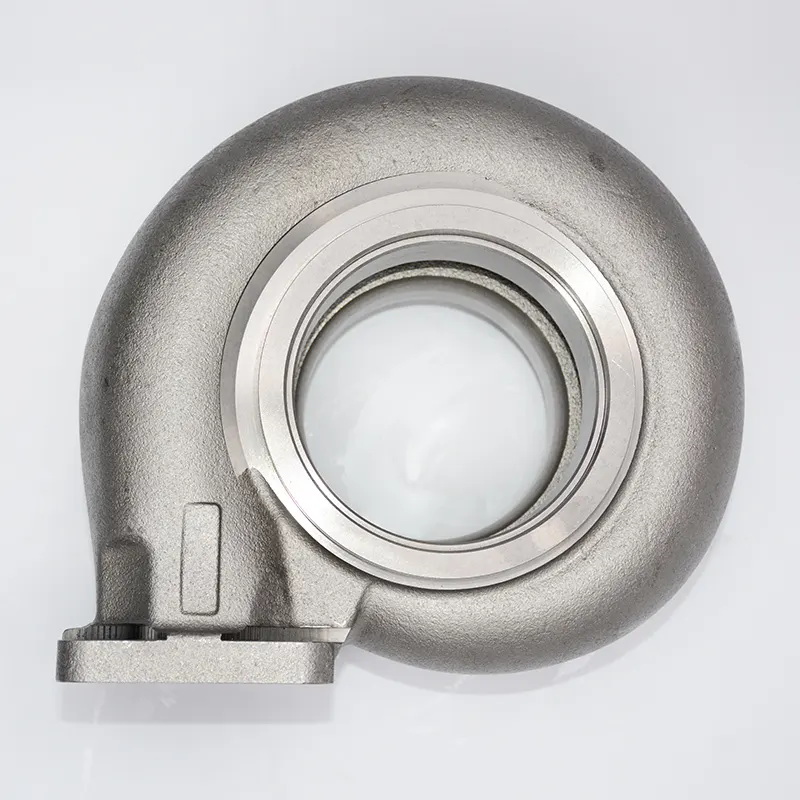
In the realm of performance turbochargers, the turbine housing is a fundamental component that significantly impacts the overall efficiency and responsiveness of the turbo system. For enthusiasts and manufacturers alike, recognizing the role of the turbine housing—and how porting turbo exhaust housing can optimize its function—is crucial to unlocking higher performance levels. This article delves deeply into the mechanics and significance of turbine housings, while also exploring how porting techniques enhance turbocharger effectiveness.
At its core, the turbine housing’s primary function is to channel exhaust gases from the engine into the turbine wheel with maximum efficiency. The exhaust gases’ energy spins the turbine, which in turn drives the compressor wheel on the opposite side, forcing more air into the engine and increasing power output. The way these gases flow through the turbine housing directly influences how quickly the turbo spools up and how much boost pressure it can generate without undue backpressure or inefficiencies.
The geometry and internal volume of the turbine housing are uniquely designed to balance spool time and top-end power. A smaller turbine housing typically allows exhaust gases to spin the turbine wheel faster, reducing turbo lag and improving throttle response at lower engine speeds. However, this can limit the overall airflow capacity, potentially restricting horsepower at higher RPMs. Conversely, a larger housing accommodates greater exhaust flow for higher peak power but often increases spool time. Therefore, manufacturers must carefully select and optimize turbine housing dimensions to match the specific application and performance goals.
This is where the concept of “Ported Turbine Housing” and “Porting Turbo Exhaust Housing” comes into play. Porting is the precision process of machining and reshaping the interior surfaces of the turbine housing to improve airflow dynamics. In a ported turbine housing, the exhaust passage is smoothed and broadened, minimizing turbulence and flow restrictions that occur at factory specifications. This subtle yet impactful modification serves to reduce exhaust backpressure and promotes a more consistent and higher velocity gas flow into the turbine wheel.
By improving flow characteristics, porting turbo exhaust housing can lead to several tangible performance benefits. Firstly, it enhances turbo spool characteristics. With smoother and less restrictive passages, exhaust gases accelerate the turbine wheel more efficiently, shrinking lag and enabling quicker boost delivery. Secondly, porting can improve overall turbocharger efficiency, as it reduces energy losses caused by turbulent exhaust flow and uneven gas distribution impacting the turbine blades. This efficiency gain can translate into better throttle response, higher boost stability, and even improved fuel consumption under certain conditions.
Moreover, precision porting allows for finer tuning of turbine housing volumes that may not be achievable solely through casting variations. Performance turbocharger manufacturers leverage advanced porting methods, such as CNC machining and flow bench testing, to develop turbine housings with optimized gas passages that align perfectly with different engine characteristics. The goal is to achieve an ideal balance, where quick spool times meet robust airflow capacity for sustained high power outputs.
Importantly, porting also serves to mitigate common issues found in stock turbine housings, such as flow separation or hot spots that can reduce turbo longevity and reliability. By eliminating irregularities and harmonizing gas flow, ported turbine housings contribute to more consistent turbocharger operation and potentially extend component life under high-performance stresses.
In the competitive landscape of performance turbochargers, manufacturers continue to push the envelope by integrating ported turbine housings with other upgrades like improved compressor wheels, enhanced cooling strategies, and refined bearing systems. Together, these advancements form a comprehensive approach to turbocharger optimization that elevates engine power delivery, drivability, and durability.
Understanding the pivotal role of the turbine housing and the benefits of porting turbo exhaust housing highlights why it remains a focal point for performance enhancements. Whether working on a street-driven vehicle aiming for quicker response, or a race car requiring maximum airflow capacity, ported turbine housings offer a crucial pathway to unlocking the true potential of forced induction systems.
- Key Challenges in Porting and Optimizing Turbine Housings
### Key Challenges in Porting and Optimizing Turbine Housings
In the highly specialized field of performance turbocharger manufacturing, porting and optimizing turbine housings is a critical but intricate process that directly influences engine efficiency, power output, and overall turbo response. The turbine housing, a core component of a turbocharger, is responsible for directing exhaust gases into the turbine wheel, where energy is extracted to spin the compressor wheel and force more air into the engine. Porting turbine housings to create “ported turbine housings” or performing “porting turbo exhaust housing” modifications is a popular method for enhancing flow characteristics, reducing backpressure, and improving turbocharger responsiveness. However, the process presents numerous technical challenges manufacturers must overcome to achieve the desired performance gains without compromising durability or reliability.
One of the foremost challenges in porting turbine housings lies in the inherent complexity of the exhaust flow dynamics. Exhaust gases entering the turbine housing are hot, pulsating, and turbulent, and they interact with the housing geometry in ways that can be difficult to predict. Traditional casted turbine housings have flow passages designed for specific flow rates and engine configurations, and altering these passages through porting requires a deep understanding of fluid dynamics. Operators must carefully reshape and smooth the exhaust flow paths to reduce flow separation and minimize turbulence while maintaining optimal velocity and pressure. Achieving this requires advanced computational fluid dynamics (CFD) analysis coupled with extensive hands-on experience, as improper porting can lead to adverse effects such as increased turbo lag or uneven turbine wheel loading.
Material properties present another set of challenges when performing porting turbo exhaust housing modifications. Turbine housings are typically cast from high-temperature alloys or stainless steel capable of withstanding extreme temperatures exceeding 1000°C. The porting process involves grinding, polishing, and sometimes welding, which must be carefully controlled to avoid introducing micro-cracks, stress concentrations, or surface imperfections that could lead to thermal fatigue or structural failure over time. The high-temperature environment also means that any modifications must retain heat resistance and durability, which places strict requirements on the tools and techniques utilized during porting.
Precision is crucial in ported turbine housing optimization. Manufacturers often strive to create an exhaust housing with just the right balance between exhaust velocity and flow volume, which can vary significantly depending on the engine’s displacement, fuel type, and intended use (e.g., drag racing, street performance, or endurance racing). Customizing the volute shape, guide vane angles (in variable geometry turbines), and turbine wheel entry points requires tight manufacturing tolerances. Even small deviations can lead to flow inconsistencies that reduce overall turbocharger efficiency or cause uneven turbine wheel wear.
Another key hurdle is the trade-off between maximizing flow and maintaining optimal exhaust pulse energy. Porting turbo exhaust housing indiscriminately by simply increasing the passage size can reduce exhaust backpressure, but it may also degrade the energy of exhaust pulses, which are critical in driving the turbine wheel efficiently at low RPMs. Experienced manufacturers must use sophisticated flow modeling and real-world testing to fine-tune port geometry to preserve the beneficial effects of exhaust pulse scavenging while accommodating higher flow rates at elevated engine speeds. This balancing act is one of the biggest technical bottlenecks in achieving both quick spool-up and sustained high-end power.
Maintaining manufacturability and repeatability also poses challenges. Ported turbine housings must be reliably reproduced to tight specifications to meet production demands and maintain consistent performance across manufacturing batches. Given the intricate nature of porting work, which in some cases remains a semi-manual process, establishing quality control standards and process automation is essential but difficult. Automation technologies such as CNC machining or laser-assisted finishing have helped reduce variability, but the initial programming and validation of such processes remain technically demanding.
Lastly, compatibility with other turbocharger components is critical. Porting and optimizing a turbine housing in isolation can lead to imbalances in the turbocharger system if compressor housing flow, turbine wheel dimensions, or bearing system characteristics are not simultaneously considered. The design and optimization of ported turbine housings therefore require an integrated approach, often involving iterative testing and refinement to harmonize the turbine and compressor side of the turbocharger assembly to maximize overall system efficiency.
In conclusion, the porting and optimization of turbine housings embody a complex array of engineering challenges. From managing turbulent exhaust gas dynamics, preserving material integrity under extreme thermal conditions, achieving precise geometric tolerances, to optimizing flow without sacrificing pulse energy, each step demands a fusion of advanced engineering tools, materials science expertise, and hands-on craftsmanship. The result of overcoming these challenges is the creation of high-performance ported turbine housings that significantly elevate turbocharger responsiveness and engine performance, embodying the pinnacle of innovation in turbocharger manufacturing.
- Advanced Techniques Used by Manufacturers for Porting Enhancements
### Advanced Techniques Used by Manufacturers for Porting Enhancements
In the highly competitive field of performance turbochargers, the evolution of ported turbine housing design has become a pivotal area for manufacturers seeking to extract maximum efficiency and power. Porting turbo exhaust housing, once regarded as a simple machining step, has evolved into an advanced, precision-driven process incorporating cutting-edge technologies and engineering principles. This article delves into the sophisticated techniques manufacturers employ to achieve optimized flow dynamics, thermal management, and structural integrity, thereby enhancing the overall performance of turbine housings.
#### Precision CNC Machining and 3D Scanning Integration
One of the foremost advancements in ported turbine housing manufacturing is the integration of CNC (Computer Numerical Control) machining paired with 3D scanning technology. Manufacturers begin by performing comprehensive 3D scans on prototype or baseline turbine housings to capture the exact geometric profile of the cast or forged parts. This data is then used to generate highly accurate digital models, allowing engineers to identify flow restrictions and turbulence points within the exhaust housing.
CNC machines equipped with multi-axis capabilities then perform intricate porting operations, ensuring that every contour and passageway is refined with micron-level precision. This level of control improves the consistency of ported turbine housing production and enables customized flow dynamics adjustments tailored to specific engine configurations or performance goals. The result is a porting turbo exhaust housing that reduces exhaust gas backpressure and promotes smoother, faster flow into the turbine wheel.
#### Computational Fluid Dynamics (CFD) Simulation
Before any physical modifications, manufacturers employ advanced Computational Fluid Dynamics (CFD) simulations to visualize and analyze the behavior of exhaust gases through various turbine housing designs. By simulating multiple porting scenarios digitally, engineers can predict the impact of changes on exhaust velocity, turbulence, and pressure drop.
This virtual testing environment allows for fine-tuning of port geometries and cross-sectional areas to maximize turbine efficiency without extensive costly trial-and-error machining. CFD-driven porting ensures that optimization targets—such as minimizing flow separation, reducing surface drag, and enhancing swirl—are met precisely. Consequently, a ported turbine housing derived from these simulations offers superior turbine response and improved spool characteristics.
#### Use of Advanced Coatings and Surface Treatments
Another sophisticated technique in ported turbine housing enhancement is the application of specialized coatings and surface treatments. After porting turbo exhaust housing surfaces are machined and polished, manufacturers may apply ceramic thermal barrier coatings or other advanced materials designed to withstand extreme temperature cycles within the turbine housing.
These coatings serve multiple functions: they reduce heat transfer to the surrounding components, protect the housing from thermal fatigue and corrosion, and in some cases, promote smoother exhaust gas flow by reducing microscopic surface roughness. By maintaining higher gas temperatures within the turbine housing, thermal efficiency is improved, which translates into increased turbine power output and faster turbine spool.
#### Additive Manufacturing and Hybrid Machining Approaches
Emerging manufacturing techniques involving additive manufacturing (3D printing) are also transforming how ported turbine housings are developed. Some manufacturers produce complex internal geometries in turbine housings that are difficult or impossible to achieve with traditional machining alone. These geometries can include optimized port shapes, internal ribs, or flow channels designed explicitly to improve exhaust gas routing.
By combining additive manufacturing with subtractive CNC machining, engineers can design and fabricate highly intricate ported turbo exhaust housings that maximize performance while minimizing weight and material waste. This hybrid approach also allows rapid prototyping and iteration cycles, enabling faster development of improved porting designs.
#### Ultra-Precise Hand Finishing and Flow Bench Testing
Despite automation and digital simulations, many manufacturers still rely on skilled technicians for the final stages of porting turbo exhaust housing enhancement. Hand finishing processes such as polishing, blending, and deburring ensure that sharp edges and minor imperfections—which can cause flow separation and reduce efficiency—are eliminated.
Post-porting, each turbine housing typically undergoes flow bench testing, where simulated exhaust conditions are applied to measure flow rates and pressure drop characteristics. These tests help validate the effectiveness of the porting work and inform further refinements. Manufacturers use this data-driven approach to ensure that every ported turbine housing meets stringent performance benchmarks before it reaches the market.
---
Through the combination of advanced CNC machining, CFD simulation, specialized coatings, additive manufacturing, and meticulous hand finishing, manufacturers are pushing the boundaries of porting turbo exhaust housing design. These techniques not only optimize airflow and reduce backpressure but also enhance thermal resilience and structural durability. The ongoing innovation in ported turbine housing processes is a testament to the commitment of performance turbocharger manufacturers to deliver superior efficiency and power gains tailored for aftermarket enthusiasts and high-performance engine applications.
- Material Innovations for Improved Turbine Housing Durability and Efficiency
**Material Innovations for Improved Turbine Housing Durability and Efficiency**
In the world of performance turbochargers, the turbine housing serves as a critical component responsible for funneling exhaust gases to spin the turbine wheel efficiently. The durability and efficiency of the turbine housing directly influence the overall performance and longevity of the turbocharger system. In recent years, manufacturers have made significant strides in material science and engineering to enhance turbine housing durability and efficiency—especially in conjunction with porting techniques such as those applied to ported turbine housings and porting turbo exhaust housings.
**Challenges Driving Material Innovation**
Turbine housings endure extreme conditions: intense heat from exhaust gases reaching upwards of 900°C (1650°F), substantial thermal cycling, and mechanical stress from exhaust gas pulsations. Additionally, ported turbine housings often feature complex geometries to optimize the flow path of exhaust gases, which can create localized hotspots and stress concentrations. Traditional cast iron housings, while affordable and relatively durable, sometimes fall short in high-performance applications where extended durability and improved thermal characteristics are paramount.
Moreover, as porting turbo exhaust housings entails reshaping and refining the exhaust flow paths to reduce turbulence and increase turbo spool responsiveness, the material used must withstand altered stress and heat profiles without warping or cracking. These performance demands have propelled material innovation as a vital element in turbocharger development.
**Advanced High-Temperature Alloys**
One of the forefront innovations is the use of advanced high-temperature alloys such as Inconel and other nickel-based superalloys. These materials offer superior resistance to oxidation, thermal fatigue, and creep deformation at elevated temperatures. For ported turbine housings, where precise port geometry must be maintained for optimal exhaust flow, the dimensional stability of these alloys under thermal cycling is invaluable.
Inconel turbine housings, though more costly, enable manufacturers to achieve a balance between toughness and heat resistance. This robustness is particularly beneficial in racing or forced-induction setups where exhaust temperatures spike significantly, ensuring the integrity of the ported profiles and preventing warping or catastrophic failure.
**Ceramic Coatings and Thermal Barrier Treatments**
Another significant innovation involves advanced ceramic coatings applied to turbine housings. Thermal barrier coatings (TBCs) reduce heat transfer from the exhaust gases to the housing body, thereby lowering the external temperature of the turbocharger and engine compartment. This cooling effect not only prolongs the life of the housing by minimizing thermal stress but also enhances efficiency by preserving exhaust energy for turbine rotation rather than dissipating heat into the surrounding metal.
When combined with porting turbo exhaust housing techniques—where exhaust gases are routed more efficiently—these coatings help maintain consistent thermal environments. This consistency reduces thermal fatigue and enhances the repeatability of turbo spool characteristics, integral to precision tuning in performance applications.
**Composite and Hybrid Materials**
Research is also exploring composite and hybrid material constructions where turbine housings incorporate ceramic matrix composites (CMCs) or reinforced polymers. While still largely experimental for mainstream turbocharger production, these materials offer remarkable heat resistance and weight reduction potential—a valuable trait for high-performance vehicles aiming to reduce rotating mass and improve throttle response.
Hybrid designs might feature a metal base structure for mechanical strength with a ceramic or composite sleeve lining the internal exhaust flow path. Such layered material approaches ensure the ported surfaces remain smooth and wear-resistant, while the housing’s external shell benefits from toughness and impact resistance.
**Additive Manufacturing and Material Structuring**
Additive manufacturing (3D printing) has also revolutionized how turbine housings are produced and subsequently ported. Using metal powders such as titanium-aluminum alloys, manufacturers can print intricate turbine housings with variable wall thicknesses, internal cooling channels, and optimized port geometries previously impossible with casting methods.
This capability allows for bespoke ported turbine housings tailored individually for specific engine setups. The precise control over material placement and microstructure obtained through additive manufacturing enhances durability against cracking and thermal fatigue, as well as improves exhaust flow dynamics through smoother port transitions.
**Material Testing and Validation**
To validate durability improvements, manufacturers extensively test turbine housing materials under simulated thermal cycling, mechanical loads, and corrosive exhaust environments. Non-destructive testing methods like X-ray tomography and ultrasonic inspection are employed to detect microcracks or voids exacerbated by the demanding conditions ported turbo exhaust housings encounter. This rigorous quality control ensures that advanced materials live up to the performance promises made in real-world applications.
In summary, material innovations—from advanced superalloys and ceramic coatings to composite materials and additive manufacturing—are reshaping the landscape of turbine housing durability and efficiency. When combined with precision porting techniques applied to ported turbine housings and porting turbo exhaust housings, these breakthroughs enable performance turbocharger manufacturers to push the limits of turbo response, reliability, and power output in modern forced induction systems.
- Measuring the Impact of Optimization on Turbocharger Performance and Reliability
**Measuring the Impact of Optimization on Turbocharger Performance and Reliability**
In the highly competitive field of turbocharger manufacturing, especially concerning performance-oriented turbochargers, optimization efforts play a critical role in enhancing both power output and durability. Among the various engineering strategies adopted, porting the turbine housing—referred to as "ported turbine housing" or "porting turbo exhaust housing"—has emerged as a pivotal modification to extract maximum efficiency from turbochargers. However, the challenge lies not just in performing these optimizations but rigorously measuring their impact on performance and reliability to guarantee meaningful improvements without compromising longevity.
Porting the turbine housing involves enlarging or reshaping the exhaust gas passages in the turbocharger’s turbine housing to reduce flow restrictions and turbulence. These modifications help direct exhaust gases more smoothly onto the turbine wheel's blades, improving overall efficiency. Performance manufacturers typically employ CNC machining or hand porting techniques to achieve highly controlled, repeatable results. However, any changes made to the turbine housing geometry directly affect gas dynamics, turbine speed, and operating temperatures, necessitating thorough evaluation to validate benefits.
**Performance Measurement: Quantifying Gains Through Flow and Dynamometer Testing**
To accurately measure the performance impact of porting turbo exhaust housing, manufacturers rely on a combination of aerodynamic flow bench testing and engine dynamometer runs. Flow benches allow precise measurement of volumetric flow rate and pressure losses through the turbine housing across a range of simulated engine operating conditions. By comparing baseline and ported turbine housings, engineers can quantify improvements in exhaust gas velocity, flow uniformity, and reductions in pressure drop.
Dynamometer testing offers a complementary approach, placing the turbocharger in real-world or simulated engine environments to determine tangible performance gains. Key parameters measured include spool-up time, peak power output, boost pressure response, and turbine speed. In many cases, optimized ported turbine housings demonstrate faster spool characteristics due to reduced flow resistance, leading to improved throttle response and higher peak power at elevated engine speeds. These tests also help identify any negative effects such as increased backpressure or reduced mid-range torque, enabling a balanced trade-off in porting design.
**Reliability Analysis: Ensuring Durability Under Demanding Conditions**
While performance improvements are vital, equally important is ensuring that porting and optimization processes do not undermine turbocharger reliability. Turbochargers operate under extreme thermal and mechanical stress conditions, with turbine housings enduring exhaust gas temperatures often surpassing 900°C and centrifugal forces at elevated speeds. Modifications that alter flow patterns may inadvertently increase hot spots or introduce stress concentrations, accelerating wear or risking failure.
Manufacturers apply rigorous durability testing to measure the impact of ported housings on reliability. Accelerated life-cycle tests simulate thousands of operating hours, monitoring for signs of cracking, warping, or material degradation. Thermal imaging and strain gauge sensors detect uneven heat distribution or mechanical stresses resulting from ported geometries. Additionally, metallurgical analyses post-testing verify that structural integrity remains uncompromised.
Crucially, porting must maintain or enhance thermal dissipation properties of the turbine housing. Some manufacturers integrate thicker wall sections or heat-resistant coatings in optimized housings to offset any increased thermal loading. This engineering balance ensures that any surge in performance does not come at the cost of reduced lifespan or increased maintenance requirements.
**Advanced Simulation: Predictive Evaluation of Ported Turbo Exhaust Housing**
Contemporary turbocharger manufacturers increasingly employ computational fluid dynamics (CFD) and finite element analysis (FEA) to predict the effects of porting before physical prototyping. CFD models simulate exhaust gas flow within ported turbine housings, allowing detailed visualization of velocity fields, turbulence intensities, and pressure gradients. This predictive capability enables optimization of port shapes and sizes to maximize flow efficiency while minimizing adverse effects.
FEA is used to model structural loads and thermal stresses under operating conditions, highlighting possible failure points or areas needing reinforcement. These simulations bridge the gap between performance targets and reliability constraints, reducing development time and cost while ensuring robust outcomes.
In summary, measuring the impact of optimization on turbocharger performance and reliability, particularly through ported turbine housings and careful porting of the turbo exhaust housing, is a multifaceted process. It combines experimental testing, real-world dynamometer evaluation, durability assessments, and advanced simulations to validate improvements. This comprehensive approach drives innovation in performance turbocharger manufacturing, yielding products that deliver enhanced power and responsiveness without sacrificing longevity.
Conclusion
In conclusion, the art of porting and optimization plays a pivotal role in how performance turbocharger manufacturers elevate the efficiency and durability of turbine housings. With nine years of industry experience under our belt, we understand that meticulous attention to detail, advanced engineering techniques, and continuous innovation are essential to unlocking the full potential of turbochargers. As manufacturers push the boundaries of performance, these enhancements not only drive power gains but also improve reliability, making high-performance driving more accessible and enjoyable. Moving forward, our commitment to excellence ensures that we remain at the forefront of turbocharger technology, delivering solutions that consistently exceed expectations and fuel the passion of enthusiasts worldwide.
Table of Contents
GET IN TOUCH WITH Us
Professional manufacturer of turbochargers and components used for diesel, natural gas engines & engineering machinery.
Useful Links
Products
Contact Us
Add: NO.1060, Antaisan Rd, Houqiao Street, Xishan District, Wuxi, Jiangsu, China