Please fill out the form below to request a quote or to request more information about us. please be as detailed as possible in your message, and we will get back to you as soon as possible with a response. we're ready to start working on your new project, contact us now to get started.
Mastering Extreme Environments: The Material Science Behind High-Performance Turbine Housing
2026-01-20
YUSEN Power
55
In the quest for unmatched efficiency and durability, turbine housings face some of the harshest conditions imaginable—from scorching temperatures to relentless mechanical stress. But what enables these critical components to not only survive but excel in such extreme environments? Dive into the fascinating world of material science behind high-performance turbine housing, where cutting-edge innovations and advanced engineering converge to push the boundaries of what's possible. Discover how breakthrough materials and design strategies are revolutionizing turbine technology, ensuring peak performance under the most demanding circumstances. Join us as we unravel the secrets behind mastering extreme environments and unlocking the future of turbine durability and efficiency.
Understanding the Challenges of Extreme Environments in Turbine Operation
Turbine housings are critical components in the performance and reliability of turbochargers, playing an instrumental role in managing exhaust gases and ensuring optimal engine efficiency. When operating under extreme environments, such as high temperatures, corrosive atmospheres, and intense mechanical stresses, turbine housings must withstand conditions that push materials to their limits. Understanding these challenges is key to developing advanced materials and designs that deliver durability and performance, particularly when considering stainless steel turbine housing and turbo exhaust housing applications.
One of the primary challenges in turbine operation is managing the high-temperature environment intrinsic to exhaust gases. Turbo exhaust housings routinely encounter temperatures exceeding 900°C, especially in high-performance and heavy-duty engines. At these temperatures, traditional materials may lose mechanical strength, suffer creep deformation, or undergo phase changes that degrade their structural integrity. This is particularly problematic in regions near the turbine inlet, where thermal gradients can be steep, causing uneven expansion and resulting in mechanical stress concentrations. Over time, such effects lead to warping, cracking, or failure of the turbine housing, jeopardizing the overall turbocharger function.
Corrosion and oxidation also present significant challenges in extreme turbine environments. Exhaust gases contain aggressive compounds such as sulfur oxides, nitrogen oxides, and unburned hydrocarbons that react chemically with turbine housing materials. For stainless steel turbine housings, this can mean the gradual breakdown of protective oxide layers or the formation of volatile corrosive species that erode the material surface. These corrosive processes compromise the durability and reliability of the housing and can lead to premature failure if not mitigated through material selection and protective coatings.
Mechanical stresses generated by pulsating exhaust gas flow and rapid temperature cycling further aggravate turbine housing performance. The turbo exhaust housing is subjected to frequent expansions and contractions during engine operation, inducing fatigue stresses that can lead to crack initiation and propagation. In severe cases, thermal shock caused by sudden changes in gas temperature or cooling rates introduces microstructural changes and localized stresses, accelerating material degradation. These cyclical stresses underscore the necessity of materials that offer not only high-temperature strength but also excellent thermal fatigue resistance.
To combat these challenges, material scientists have extensively studied and refined alloys suitable for turbo exhaust and turbine housings. Stainless steel turbine housing, in particular, has become a favored choice due to its excellent combination of corrosion resistance, high-temperature stability, and mechanical robustness. The chromium content in stainless steels forms a stable, adherent oxide layer that protects the underlying metal from oxidation and corrosion under harsh exhaust conditions. Specific stainless steel grades—such as austenitic and martensitic types—are selected and sometimes optimized through heat treatments and alloying additions to enhance creep resistance and toughness.
Besides chemical and mechanical properties, manufacturing considerations must be integrated with material performance. Casting or forging turbine housings from stainless steel must account for microstructural uniformity to avoid weak spots that initiate failure under extreme conditions. Advanced casting techniques, including investment casting or precision sand casting, help produce intricate turbo exhaust housing geometries while minimizing porosity and inclusions. Furthermore, surface treatments or thermal barrier coatings may be applied to improve corrosion resistance and reduce thermal conduction, further enhancing the component’s ability to endure cyclic high-temperature exposure.
The operating environment also drives innovation in turbine housing design, with efforts focusing on optimizing flow dynamics to reduce thermal hotspots and mechanical vibrational stresses. Sophisticated computational modeling enables engineers to simulate extreme conditions and refine turbo exhaust housing shapes, reducing stress concentrations and improving heat dissipation. Combining these design strategies with high-performance stainless steel materials results in more reliable, longer-lasting turbine housings capable of mastering extreme environments.
In sum, the extreme operating conditions of turbine housings—characterized by elevated temperatures, aggressive chemical attack, and cyclic mechanical loading—require a thorough understanding of material behavior and environmental interactions. Advances in stainless steel turbine housing metallurgy, manufacturing processes, and design optimization continue to push the boundaries of what turbo exhaust housings can withstand, sustaining their crucial role in high-performance turbine operation.
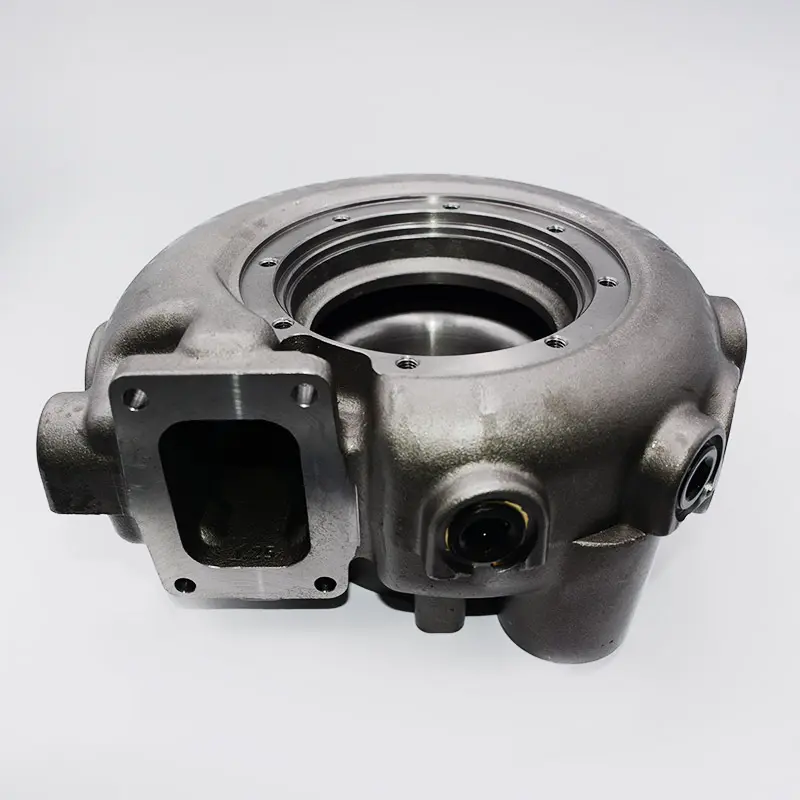
Key Material Properties for High-Performance Turbine Housings
In the realm of advanced engineering, turbine housings play a critical role in enabling high-efficiency performance and durability, especially under the harsh conditions seen in automotive turbochargers, aerospace applications, and power generation. The pursuit of mastering extreme environments hinges significantly on the selection and optimization of materials used in turbine housings. Turbine housings, including stainless steel turbine housings and turbo exhaust housings, must be engineered with materials exhibiting a balanced combination of mechanical strength, thermal stability, corrosion resistance, and manufacturability to ensure reliability and longevity.
At the core of turbine housing design is the need to withstand high temperatures and aggressive thermal cycling without compromising structural integrity. Turbo exhaust housings, situated immediately downstream of the turbine wheel, are regularly exposed to exhaust gases that can exceed temperatures of 850°C (1562°F) during operation. Consequently, materials used in these components must retain their mechanical properties at elevated temperatures. This requirement makes stainless steel alloys, particularly those with high chromium and nickel contents, highly desirable due to their excellent high-temperature strength and creep resistance. Austenitic stainless steels like the 300 series are frequently chosen for their ability to maintain toughness while resisting deformation under cyclic thermal loads.
Corrosion resistance is another pivotal criterion in selecting materials for turbine housings. Exhaust gases contain various oxidizing agents and particulate matter that can cause rapid degradation of inferior materials. Stainless steel turbine housings offer a distinct advantage in this regard owing to the formation of protective oxide layers on their surfaces. These passivation layers effectively shield the underlying metal from further oxidation and corrosion, enhancing the lifespan of the turbo exhaust housing in harsh exhaust gas atmospheres. Certain grades of stainless steel can also resist sulfidation and carburization, common chemical processes that degrade materials exposed to combustion byproducts.
In addition to thermal and chemical challenges, turbine housings are also subjected to considerable mechanical stresses caused by vibration, pressure pulsations, and thermal expansion mismatches. High-performance turbine housings must exhibit exceptional mechanical strength, fatigue resistance, and toughness to endure these dynamic loads without cracking or warping. The microstructural attributes of stainless steel alloys, combined with careful alloy composition and heat treatment, can significantly improve resistance to fatigue and creep. For turbo exhaust housings, this translates to maintaining dimensional stability and ensuring a tight seal with adjoining components such as the turbine wheel and exhaust manifold.
The manufacturability of stainless steel turbine housings is equally important, as complex shapes and thin walls often are essential to optimize flow dynamics and reduce component weight. Stainless steels provide a good balance of formability and weldability, allowing manufacturers to produce intricate designs that contribute to overall turbine efficiency. Advanced production techniques, including precision casting, investment casting, and machining, capitalize on the advantageous physical properties of stainless steel to produce turbine housings with tight tolerances and smooth internal surfaces to minimize exhaust gas turbulence and boost performance.
Another key aspect is resistance to thermal shock — rapid temperature changes experienced during engine start-up and shut-down cycles. The ability of the material to absorb and dissipate thermal stresses without crack initiation is vital to prevent premature failure. Stainless steel’s relatively high thermal conductivity and ductility help accommodate thermal gradients more effectively than many other materials.
Emerging material innovations continue to push the boundaries for turbine housing performance. Advanced stainless steel alloys with improved compositions, ceramic coatings, and surface treatments are being developed to enhance oxidation resistance further and reduce heat loss. These technological improvements are crucial for the next generation of turbo exhaust housings, which demand even higher efficiency and durability as environmental regulations tighten and engine power densities rise.
In summary, the key material properties that define high-performance turbine housings—including stainless steel turbine housings and turbo exhaust housings—are a blend of high-temperature mechanical strength, corrosion resistance, fatigue durability, manufacturability, and thermal shock resistance. Each property synergizes to meet the extreme environmental challenges posed by turbocharged applications and sets the foundation for material science innovations that continue to advance turbine housing technology.
Innovations in Alloy Development and Coatings for Durability
In the realm of turbine housing, particularly stainless steel turbine housing and turbo exhaust housing, enduring extreme environmental conditions is paramount. These components operate under intense thermal, mechanical, and chemical stresses that can rapidly degrade materials if not properly engineered. Therefore, breakthrough innovations in alloy development and protective coatings have become critical to elevate the durability and performance of turbine housings. This synergy of advanced materials science and surface engineering enables the production of turbine housings that withstand harsh operating environments and extend service life significantly.
One of the most significant advances in alloy development for turbine housing revolves around the optimization of stainless steel formulations. Stainless steel turbine housings require a balanced composition that offers superior heat resistance, oxidation protection, and mechanical strength. Modern alloy engineering has introduced specialized grades of stainless steel, such as austenitic and martensitic variants enriched with elements like chromium, nickel, molybdenum, and niobium. These elements contribute variously to forming a dense, adherent oxide scale on the housing surface, enhancing corrosion resistance and mitigating oxidative degradation at elevated temperatures typical in turbo exhaust housing applications.
Recent breakthroughs have led to the creation of superalloys specifically tailored for turbine housing environments. These alloys exhibit exceptional creep resistance, tensile strength, and toughness at temperatures exceeding 700°C, a condition often endured by turbo exhaust housings. The controlled addition of rare earth metals and grain boundary strengthening agents helps inhibit microstructural changes such as grain coarsening and phase transformations that could compromise the mechanical integrity of stainless steel turbine housing under cyclical thermal loading. This results in turbines capable of operating longer intervals without micro-cracking or deformation.
Beyond base alloy improvements, surface engineering through coating technologies has revolutionized the durability prospects of turbine housings. Thermal barrier coatings (TBCs) have emerged as one of the most effective methods for shieldings turbo exhaust housing surfaces from extreme heat. These coatings, typically comprising zirconia stabilized with yttria or other ceramic mixtures, provide a low thermal conductivity barrier that reduces the metal substrate temperature. This thermal insulation significantly lessens oxidation and thermal fatigue while enhancing overall operational efficiency by allowing higher combustion temperatures in the turbine.
In addition to thermal protection, oxidation-resistant coatings applied via physical vapor deposition (PVD), chemical vapor deposition (CVD), or plasma spray techniques create a resilient layer on stainless steel turbine housings. These coatings often incorporate alumina or chromia phases, which serve as protective scales resisting corrosive exhaust gases and particulate-induced erosion. The coatings are engineered to maintain adherence under severe thermal cycling, thereby reducing spallation and maintaining the structural integrity of the turbo exhaust housing.
Another innovative direction integrates multifunctional coatings that combine thermal insulation with anti-corrosive and anti-fouling properties. For instance, nanostructured composite coatings embed reinforced ceramic nanoparticles within metallic matrices to offer unique tribological and chemical stability. This approach significantly improves resistance against oxidation, sulfide corrosion, and particulate abrasion, which are common challenges faced during turbine operation in aggressive environments.
The manufacturing process controls applied during alloy fabrication and coating deposition also play an essential role. Advanced techniques such as additive manufacturing (AM) allow for precision engineering of turbine housing components with intricate cooling channels and graded material properties. When combined with customized coating systems, AM-fabricated stainless steel turbine housings demonstrate unprecedented durability paired with tailored thermal management, enhancing turbo exhaust housing service life and performance harmoniously.
Lastly, the ongoing research on self-healing coatings and adaptive alloy compositions holds promising potential for the future. These smart materials can autonomously repair micro-cracks or oxidized layers during turbine operation, preventing progressive damage without requiring shutdown or manual maintenance. Integrating such innovations into stainless steel turbine housing and turbo exhaust housing further propels durability, reliability, and efficiency in extreme engine environments.
Through the convergence of meticulous alloy composition adjustments, cutting-edge coating technologies, and sophisticated manufacturing methods, the high-performance turbine housing industry is mastering the challenges of extreme operational environments. These material science innovations continue to push the boundaries of thermal and chemical resilience, ensuring that modern turbines meet the stringent demands for power, longevity, and safety in increasingly harsh conditions.
Testing and Performance Evaluation Under Harsh Conditions
In the realm of advanced turbine technology, the integrity and reliability of turbine housings play a pivotal role in ensuring optimal engine efficiency and longevity. This is particularly critical when these components are exposed to extreme operational environments that challenge their material properties and structural resilience. The turbine housing, especially stainless steel turbine housings and turbo exhaust housings, must endure elevated temperatures, corrosive gases, intense mechanical stresses, and rapid thermal cycling. Therefore, rigorous testing and performance evaluation under harsh conditions are indispensable steps in mastering the material science behind high-performance turbine housings.
One of the foremost challenges in testing turbine housings involves simulating the extreme thermal environment they encounter during actual operation. Turbine housings must withstand temperatures often exceeding 1000°C, which can induce significant thermal expansion and stress. To replicate this, laboratory testing protocols subject stainless steel turbine housings to controlled thermal cycles that mirror real-world engine startup and shutdown sequences. These tests examine the material’s ability to resist thermal fatigue, cracking, and deformation. The results are critical for verifying whether the stainless steel alloy chosen can maintain structural integrity and avoid catastrophic failure in service.
In addition to thermal stress testing, mechanical load testing is employed to assess how turbine housings respond to vibration, pressure fluctuations, and mechanical impacts. Since turbo exhaust housings are located near high-speed rotating components, they must exhibit high resistance to vibration-induced fatigue. Advanced mechanical testing rigs apply cyclic loads and vibrational forces to prototype housings, helping engineers identify potential weak points in welds, joints, or casting defects. Such mechanical robustness ensures that the turbine housing can sustain prolonged operational cycles without degradation.
Corrosion resistance testing is another crucial facet of performance evaluation. Turbo exhaust housings often encounter aggressive corrosive agents such as exhaust gases containing sulfur compounds, unburnt hydrocarbons, and condensates, which can accelerate material degradation. Stainless steel turbine housings are favored partly due to their superior corrosion resistance, yet verification is necessary for each alloy grade and surface treatment. Accelerated corrosion tests involve exposing samples to chemically harsh environments within laboratory chambers, where factors such as temperature, humidity, and chemical composition can be tightly controlled. These tests confirm the housing’s ability to resist oxidation, pitting, and stress corrosion cracking, all of which could compromise its mechanical strength and gas flow efficiency.
Another innovative testing approach involves real-time in situ monitoring using sensor integration. Modern turbine housing designs sometimes incorporate temperature sensors, strain gauges, and acoustic emission detectors to monitor the component’s health during operation. This data is invaluable in performance evaluation as it provides insight into the actual conditions experienced by the turbo exhaust housing. By analyzing sensor outputs during engine runs, engineers can detect abnormal thermal gradients, stress concentrations, or material deformation before visible damage occurs. This proactive monitoring approach supports predictive maintenance strategies, reducing downtime and preventing unexpected failures.
Material microstructure analysis before and after harsh condition testing also offers profound understanding of failure mechanisms. Electron microscopy and X-ray diffraction techniques allow researchers to observe phase transformations, grain boundary changes, and the formation of microcracks within stainless steel turbine housings. These microscopic insights help guide alloy optimization, heat treatment processes, and surface coating development to enhance durability. Understanding how microscopic changes translate to macroscopic performance allows for the refinement of turbine housing materials tailored specifically for extreme environments.
Moreover, computational modeling complements physical testing by simulating harsh operating environments and predicting performance outcomes. Finite Element Analysis (FEA) models incorporate thermal, mechanical, and chemical stress factors to forecast turbine housing behavior under various scenarios. These simulations can identify potential hotspots or failure regions that may not be evident from physical testing alone, enabling engineers to redesign or reinforce the housing before manufacturing. Combining computational predictions with empirical testing creates a robust validation framework ensuring the stainless steel turbine housing meets rigorous performance standards.
Finally, long-term endurance testing—often running continuously for hundreds or thousands of hours—validates the turbine housing’s sustained performance under actual or simulated engine conditions. These endurance tests reproduce the complex interactions of heat, stress, and corrosive exposure over time, providing a realistic assessment of lifespan and reliability. Data gathered informs maintenance schedules and replacement cycles critical to the safe operation of turbine-powered systems.
In summary, the testing and performance evaluation of turbine housings, particularly stainless steel turbine housings and turbo exhaust housings, under harsh conditions involves a multifaceted approach that integrates thermal, mechanical, corrosion, microscopic, sensor-based, computational, and endurance assessments. Together, these methodologies enable material scientists and engineers to master the design and production of turbine housings capable of thriving in the most extreme environments, pushing the boundaries of turbine performance and durability.
Future Trends in Material Science for Turbine Housing Enhancement
The demanding nature of turbine housings, particularly stainless steel turbine housings and turbo exhaust housings, necessitates continual advancements in material science to meet the extreme conditions they face. As turbine technology evolves, so does the need for materials that not only withstand high temperatures and corrosive exhaust gases but also contribute to enhanced performance, durability, and efficiency. The future of material science for turbine housing enhancement is poised to leverage innovative alloys, surface engineering, additive manufacturing, and smart materials to redefine the capabilities of turbine housings in extreme environments.
One of the most significant trends currently emerging in this field is the development of advanced high-temperature alloys specifically designed for turbine housings. Traditional stainless steel turbine housings, while offering a good balance of corrosion resistance and mechanical strength, are reaching their performance limits in cutting-edge turbine systems operating at increasingly elevated temperatures. Researchers are investigating novel alloying strategies to create next-generation superalloys with exceptional creep resistance and oxidation protection. These alloys often incorporate elements such as nickel, cobalt, and refractory metals like tantalum or niobium, which enhance strength and maintain structural integrity at temperatures exceeding current standards, thus prolonging the life of turbo exhaust housings exposed to extreme thermal stresses.
Alongside alloy development, surface engineering techniques are revolutionizing turbine housing protection. Thermal barrier coatings (TBCs), ceramic overlays, and diffusion coatings are now being optimized to shield stainless steel turbine housings from corrosive exhaust gases and thermal cycling. Future coating technologies are expected to evolve into multi-layered systems with improved adhesion and thermal expansion compatibility, significantly reducing thermal fatigue and corrosion-related failures. Additionally, advanced nano-structured coatings, leveraging nanotechnology, offer promising breakthroughs by providing enhanced hardness and self-healing capabilities to combat micro-crack formation in turbo exhaust housings due to prolonged heat exposure.
Additive manufacturing (AM), or 3D printing, is another transformative trend set to impact turbine housing design and materials. Traditionally, turbine housings require complex manufacturing processes with tight tolerances to ensure optimum aerodynamic and thermal performance. Advanced AM techniques enable the fabrication of intricate geometries from novel alloy powders, allowing customization of the internal cooling channels and structural reinforcements within stainless steel turbine housings. This not only improves heat dissipation but also reduces the component’s overall weight, boosting turbine efficiency and reducing fuel consumption. Furthermore, additive manufacturing facilitates rapid prototyping and iterative testing of new material compositions, accelerating the innovation cycle in turbo exhaust housing materials.
Smart materials embedded with sensors represent a futuristic approach that could redefine maintenance and monitoring of turbine housings. Integration of temperature-sensitive or strain-responsive materials within the turbine housing matrix will enable real-time structural health monitoring. Such smart stainless steel turbine housings could autonomously detect micro-fractures, thermal degradation, or corrosive damage, triggering timely maintenance before catastrophic failures occur. This trend aligns with the broader Industry 4.0 movement, pushing turbine housing materials beyond passive structural roles toward active contributors to operational safety and reliability.
In the quest for sustainability, future material science trends also focus heavily on eco-friendly and recyclable alloy components for turbine housings. Innovations aim to reduce the environmental impact throughout the lifecycle of turbo exhaust housings, from raw material extraction to end-of-life recycling. Research into bio-inspired materials and composites that can withstand turbine conditions while being lighter and less reliant on scarce metals is gaining momentum. These materials could potentially decrease the carbon footprint of turbine manufacturing and operation without compromising performance.
Lastly, the advent of computational materials science and machine learning is accelerating the discovery and optimization of turbine housing materials. Predictive modeling enables scientists to simulate extreme environmental conditions and design stainless steel turbine housings with tailored microstructures and properties before physical testing. This data-driven approach is set to drastically reduce development costs and time, fostering the creation of materials finely tuned for specific turbine applications, whether for aerospace, power generation, or automotive turbochargers.
Together, these future trends herald a new era in turbine housing technology where material science not only responds to extreme environments but anticipates and overcomes the challenges posed by next-generation turbine performance requirements. Turbine housings, including stainless steel and turbo exhaust housings, will emerge stronger, lighter, smarter, and more sustainable, driving progress in multiple high-performance industries.
Conclusion
In conclusion, mastering the challenges of extreme environments is no small feat, and it is the cutting-edge material science behind high-performance turbine housings that makes this possible. With nine years of industry experience under our belt, we understand the critical importance of innovation, durability, and precision in delivering components that not only withstand but excel under the harshest conditions. As we continue to push the boundaries of technology and materials engineering, our commitment remains steadfast: to provide turbine housings that set new standards in performance and reliability. Together, we are powering the future of energy and propulsion with solutions designed to endure and perform, no matter how extreme the environment.
Table of Contents
GET IN TOUCH WITH Us
Professional manufacturer of turbochargers and components used for diesel, natural gas engines & engineering machinery.
Useful Links
Products
Contact Us
Add: NO.1060, Antaisan Rd, Houqiao Street, Xishan District, Wuxi, Jiangsu, China