Please fill out the form below to request a quote or to request more information about us. please be as detailed as possible in your message, and we will get back to you as soon as possible with a response. we're ready to start working on your new project, contact us now to get started.
The Heart Of Boost: Advanced Materials & Processes In Turbine Housing Manufacturing
2026-01-14
YUSEN Power
36
Welcome to the cutting edge of turbine technology! In “The Heart of Boost: Advanced Materials & Processes in Turbine Housing Manufacturing,” we dive deep into the innovative materials and state-of-the-art manufacturing techniques that are revolutionizing turbine housings. Discover how breakthroughs in metallurgy, precision engineering, and production processes are driving unprecedented performance, durability, and efficiency in turbines. Whether you're an industry professional or an engineering enthusiast, this article unveils the fundamental advancements powering the future of turbo machinery. Read on to explore the science and craftsmanship at the very core of boost technology!
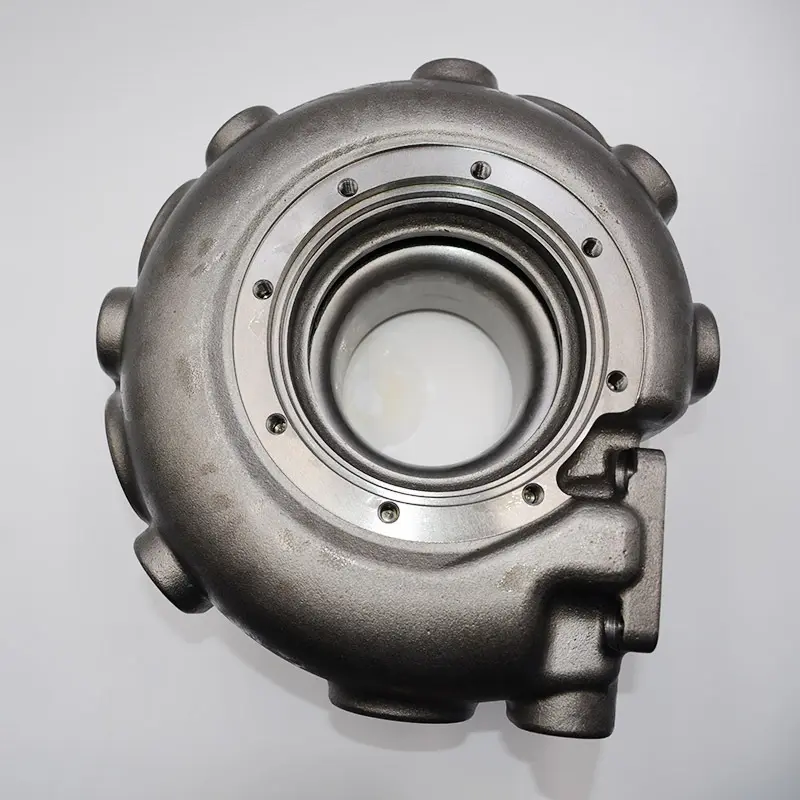
- Understanding the Role of Turbine Housing in Boost Systems
Understanding the Role of Turbine Housing in Boost Systems
In the world of forced induction, the turbine housing stands as a fundamental component that directly influences the efficiency and performance of turbocharged engines. Often overshadowed by the more prominent parts like the compressor or the turbine wheel itself, the turbine housing—sometimes referred to as turbo housing—plays a critical role in managing exhaust gases and transforming their energy into increased engine power. This article explores the vital functions and design considerations of turbine housing in boost systems, underlining why advanced materials such as stainless steel have become pivotal in manufacturing these components.
At its core, the turbine housing is the enclosure that guides hot exhaust gases from the engine into the turbine wheel. Its design dictates the flow velocity, pressure, and distribution of these gases, which in turn governs how efficiently the turbine can extract energy. Unlike other parts of the turbocharger, turbine housings operate under extremely high temperatures—often exceeding 800°C—because they come into direct contact with exhaust gases exiting the combustion chamber. Therefore, the choice of material and manufacturing process directly affects the durability, thermal resistance, and overall performance of the turbine housing.
One of the key roles of the turbine housing is to create a streamlined passageway that maximizes the kinetic energy of the exhaust gases. This is done by carefully shaping the volute—the spiral-shaped chamber inside the housing—which directs the gas flow tangentially onto the turbine wheel. The geometry of the turbine housing impacts the turbocharger’s responsiveness, boost pressure, and spool time. For example, a smaller volute cross-sectional area will accelerate exhaust gases faster, promoting quicker spool-up and better low-end torque. Conversely, a larger cross-sectional area favors high-end power by allowing greater volume flow at higher engine speeds.
In addition to shaping exhaust gas flow, the turbine housing also provides thermal insulation and structural integrity. Since turbocharger components expand and contract with temperature fluctuations, the turbo housing material must withstand thermal cycling without cracking or warping. This is where stainless steel turbine housings have gained significant prominence. Stainless steel alloys offer excellent corrosion resistance, superior heat tolerance, and sufficient mechanical strength, making them ideal for enduring the harsh environment inside the exhaust stream.
Traditional turbine housings were often made from cast iron due to its affordability and decent heat resistance. However, cast iron is heavier and more brittle than stainless steel. By transitioning to stainless steel turbo housing materials, manufacturers achieve lighter, more durable components that can accommodate higher boost pressures and extreme thermal conditions without failure. Moreover, stainless steel is better suited for advanced manufacturing techniques such as precision casting and additive manufacturing, enabling the production of complex shapes and thin walls that optimize airflow and heat dissipation.
Another important aspect to highlight is the turbo housing’s role in noise and emissions control. Since the housing contains and controls the flow of high-velocity exhaust gases, its design influences the sound characteristics of the turbo system, including the characteristic “turbo whistle” or “whine.” Additionally, well-engineered turbine housings contribute to more complete energy recovery from exhaust gases, promoting better combustion efficiency and lowering emissions, thus supporting modern emission standards.
Furthermore, the integration of advanced materials and enhanced manufacturing processes enables customization of turbine housing configurations to suit specific engine and performance needs. Elements such as variable geometry turbine housings (VGTs) incorporate movable vanes within the turbine housing, adjusting exhaust flow dynamically to improve efficiency over a wider range of engine speeds. High-precision stainless steel casting techniques ensure that these complex internal components maintain strict tolerances critical for predictable performance and longevity.
In boost systems, the turbine housing effectively serves as the gateway that converts exhaust energy into mechanical power driving the compressor side of the turbocharger. Its significance may lie beneath the surface, but optimizing turbine housing design and material composition directly fosters higher power outputs, reduced turbo lag, and longer component life. Through continued advancements in stainless steel turbine housing manufacturing, including alloy improvements and innovative fabrication methods, turbocharged engines push the boundaries of performance and reliability further than ever before.
- Innovations in Advanced Materials for Enhanced Durability
**Innovations in Advanced Materials for Enhanced Durability**
In the realm of turbocharger manufacturing, the turbine housing plays a pivotal role, directly influencing the efficiency, durability, and overall performance of the turbo system. As demands for higher power output and extended service life escalate, the materials used in turbine housings have undergone significant advancements. Innovations in advanced materials have paved the way for the creation of turbine housings that not only withstand extreme operating conditions but also enhance the reliability and longevity of turbochargers. This article delves into the latest material innovations shaping the future of turbine housing manufacturing, with a particular focus on turbo housing and stainless steel turbine housing applications.
The turbine housing must endure harsh environments characterized by extremely high temperatures, severe thermal cycling, and corrosive exhaust gases. Traditional cast iron turbine housings, while economical and easy to manufacture, have inherent limitations in thermal resistance and mechanical strength. This has fueled the search for materials with superior properties, capable of improving durability without compromising on manufacturability or cost-effectiveness.
One of the most significant breakthroughs in turbine housing materials is the adoption and refinement of stainless steel alloys tailored specifically for turbo applications. Stainless steel turbine housing variants offer numerous advantages over conventional materials. The enhanced heat resistance of stainless steel reduces warping and cracking risks induced by rapid temperature fluctuations, a prevalent challenge in turbocharger operation. Furthermore, stainless steel exhibits excellent corrosion resistance, effective against the chemically aggressive exhaust environment. This translates to longer-lasting turbine housings that maintain structural integrity over extensive service periods.
In addition to conventional stainless steels, advanced metallurgy has introduced high-performance superalloys and heat-resistant stainless steel grades, such as Inconel and AISI 310 stainless steel, into turbine housing production. These alloys possess superior high-temperature strength, creep resistance, and oxidation resistance. The incorporation of these materials has expanded the operational envelope of turbo housings, allowing for more aggressive boost pressures and temperatures without sacrificing durability.
Beyond alloy composition, innovative manufacturing technologies complement the material advances. Techniques such as powder metallurgy, additive manufacturing (3D printing), and precision casting allow for optimized microstructures and tailored properties in turbine housings. For instance, controlled solidification during casting results in finer grain structures, enhancing both mechanical strength and fatigue resistance. Additive manufacturing enables the creation of complex turbine housing geometries with internal cooling passages that are otherwise difficult or impossible to machine. These cooling features help regulate housing temperatures, mitigating thermal stresses and further extending component lifespan.
The application of ceramic coatings to stainless steel turbine housings constitutes another innovation enhancing durability. Thermal barrier coatings (TBCs), composed typically of yttria-stabilized zirconia, can be applied to the turbine side of the housing to reduce heat transfer to adjacent components and delay material degradation. These coatings also improve resistance to oxidation and corrosion, complementing the inherent benefits of stainless steel materials. The synergy of advanced stainless steel alloys with protective coatings represents a cutting-edge approach to improving turbo housing resilience under demanding operating conditions.
Another important consideration is the environmental impact of materials and manufacturing processes. Recent innovations emphasize the development of stainless steel turbine housings that are not only more durable but also environmentally sustainable. The recyclability of stainless steel makes it a green material choice, and advancements in processing techniques reduce waste and energy consumption.
In turbo housing design, enhanced durability directly contributes to better turbocharger performance by maintaining tight tolerances and minimizing deformation under thermal and mechanical loads. This ensures consistent exhaust flow management and improved boost response over the lifetime of the turbo. As vehicle manufacturers push for higher efficiency and emissions standards, these material innovations become critical enablers for next-generation turbo systems.
Overall, ongoing research and development in advanced materials continue to transform turbine housing manufacturing. The integration of stainless steel turbine housings with high-performance alloys, modern casting and additive manufacturing techniques, and protective ceramic coatings offers a multifaceted approach to tackling durability challenges. These innovations not only improve the robustness and reliability of turbo housings but also drive performance improvements that power today’s high-demand internal combustion engines and industrial turbo applications. Consequently, the heart of boost—the turbine housing—evolves from a simple structural component into a sophisticated, high-tech product engineered for the rigors of modern turbocharging technology.
- Cutting-Edge Manufacturing Techniques Transforming Turbine Housings
In the dynamic world of turbochargers, the turbine housing stands as a critical component that significantly influences both performance and durability. Traditionally, turbine housings—also known as turbo housings—have been manufactured using conventional casting and machining processes, which, while reliable, impose certain limitations on precision, material properties, and production efficiencies. However, the advent of cutting-edge manufacturing techniques is revolutionizing the way turbine housings, particularly stainless steel turbine housings, are designed and produced. These innovations are not only enhancing the performance characteristics of turbochargers but also enabling new levels of customization, strength, and thermal resilience crucial for modern high-performance engines.
One of the foremost advancements transforming turbine housing manufacturing is the adoption of additive manufacturing (AM), commonly referred to as 3D printing. Unlike traditional subtractive methods, additive manufacturing allows for the layer-by-layer construction of turbo housings using advanced metal powders, including stainless steel alloys tailored for high-temperature applications. This method makes possible complex geometries that were previously unachievable due to tooling constraints, such as optimized internal flow channels, integrated cooling passages, and lightweight lattices to reduce overall mass without compromising structural integrity. For stainless steel turbine housings, AM techniques provide precise control over microstructure, which directly translates into improved resistance to thermal fatigue, corrosion, and oxidation—factors that are critical under the extreme conditions turbines endure.
Another groundbreaking technique reshaping turbo housing production is advanced investment casting enhanced by numerical simulation and controlled solidification processes. Modern investment casting employs sophisticated computer-aided design (CAD) and computational fluid dynamics (CFD) to optimize mold design, leading to fewer defects and superior dimensional accuracy. This results in turbo housings that exhibit consistent wall thickness, homogeneous microstructures, and minimized residual stresses. When working with stainless steel turbine housings, this precision becomes paramount, as uniform material properties ensure reliable performance at elevated temperatures and pressures. The integration of heat treatment processes post-casting further refines mechanical properties, enhancing creep resistance and toughness that contribute to longer turbocharger lifespans.
High-precision machining technologies have also undergone considerable evolution. Multi-axis CNC machining centers now use advanced tooling and real-time monitoring to achieve extremely tight tolerances in finishing turbine housings. Particularly for stainless steel turbo housings, which are tougher to machine due to work-hardening tendencies, new coated carbide and ceramic cutting tools combined with optimized cutting parameters reduce tool wear and improve surface finish quality. This results in smoother exhaust gas flow paths and better sealing interfaces, ultimately boosting turbo efficiency and reliability.
Laser-based surface engineering techniques are gaining traction as well. Processes such as laser cladding and laser surface melting are employed to enhance the surface properties of turbine housings. These methods deposit thin layers of corrosion-resistant or wear-resistant stainless steel alloys directly onto critical areas, effectively increasing resistance to harsh exhaust gases and prolonged thermal cycling. Laser surface treatments can also create graded material transitions, reducing thermal mismatch stresses that commonly cause cracking or warping in turbo housings over time.
Moreover, incorporating hybrid manufacturing techniques is becoming a standard in turbine housing production. Combining additive manufacturing with subtractive machining and thermal treatments creates a synergistic workflow that capitalizes on the strengths of each method. For instance, a near-net-shape stainless steel turbine housing can be 3D printed with intricate internal features, then precisely machined to achieve tight dimensional specifications, followed by surface treatments to enhance longevity. This integrated approach streamlines production, lowers material waste, and accelerates time-to-market for turbocharger manufacturers.
Material innovation goes hand-in-hand with manufacturing advances. The deployment of specialized stainless steel alloys, such as duplex and precipitation-hardened grades, works in tandem with new processing techniques to push the boundaries of turbine housing performance. These alloys offer high strength-to-weight ratios, excellent corrosion resistance, and stability at temperatures exceeding 900°C, making them ideal for turbo housings exposed to intense exhaust gas conditions. Modern manufacturing processes allow these alloys to be efficiently shaped and finished without compromising their superior properties.
In conclusion, the manufacturing of turbine housings is undergoing a profound transformation driven by cutting-edge techniques including additive manufacturing, precision casting with simulation, advanced CNC machining, laser surface engineering, and hybrid process integration. Together, these technologies are enabling the production of turbo housings—especially stainless steel turbine housings—that deliver unprecedented performance, reliability, and efficiency in turbocharged engines. As the automotive and aerospace industries continue to demand higher output and lower emissions, these manufacturing innovations ensure the turbine housing remains the heart of boost technology, robustly supporting the future of turbocharging advancements.
- Overcoming Challenges in Material Selection and Processing
**Overcoming Challenges in Material Selection and Processing**
The quest to engineer high-performance turbine housings—commonly referred to as turbo housings—has always been riddled with complexities arising from the extreme operating conditions these components face. At the core of turbocharger efficiency and durability, the turbine housing must be meticulously designed not only to optimize airflow and thermal management but also to withstand intense thermal cycling, high pressures, and corrosive exhaust gases without degrading. Overcoming challenges in material selection and processing, therefore, becomes essential to advancing turbine housing technology, particularly for applications demanding reliability and longevity, such as automotive and aerospace turbochargers.
One of the fundamental challenges in manufacturing turbine housings is identifying a material that simultaneously offers excellent thermal resistance, mechanical strength, corrosion resistance, and machinability. Stainless steel turbine housing emerges as an ideal candidate due to its excellent corrosion resistance and high-temperature strength compared to traditional cast iron or aluminum. However, stainless steel alloys pose certain manufacturing hurdles. Their high melting points, work hardening behavior, and tendency to form carbides at grain boundaries demand careful control over material processing techniques to avoid embrittlement and maintain structural integrity.
Material selection must take into account not only the raw material properties but also the operational stresses the turbo housing will encounter. For instance, the housing is exposed to exhaust gases that can reach temperatures upwards of 900°C or more during peak operation. Under these conditions, thermal fatigue and oxidation can cause significant deterioration. Manufacturers often specify specialized stainless steel grades such as AISI 321 or AISI 347 for their titanium or niobium stabilizers, which help resist intergranular corrosion and sustain high creep resistance at elevated temperatures. This specificity in material choice helps enhance the service life of turbo housing components while optimizing cost and performance.
Beyond raw material concerns, the processing of stainless steel turbine housings presents additional obstacles. Casting stainless steel turbo housings is considerably more complex than casting traditional cast iron counterparts due to the metal’s higher melting point and susceptibility to oxidation and slag inclusions. Precision casting methods such as investment casting or lost-wax casting are often employed to achieve the required near-net shape with minimal machining. However, controlling the microstructure during solidification is critical to avoid defects such as porosity and segregation, which can compromise mechanical properties and dimensional accuracy.
Post-casting processes are equally critical in overcoming processing challenges. Stainless steel turbine housings require heat treatment protocols specifically tailored to relieve internal stresses and refine grain structure without precipitating unwanted phases. Annealing and solution treatment help restore ductility and improve toughness, but the parameters must be tightly controlled. Additionally, machining stainless steel turbine housings demands specialized tooling and cutting conditions because the alloy’s toughness and work hardening tendency can lead to rapid tool wear and dimensional deviations. Advances in CNC machining, tool material technologies, and coatings have helped address these challenges, enabling high-precision manufacturing of complex turbo housing geometries essential for efficient airflow and sealing requirements.
Additive manufacturing (AM) is an emerging frontier in overcoming these material and processing challenges. Techniques such as selective laser melting (SLM) enable the fabrication of stainless steel turbine housings with complex internal channels that were previously impossible or prohibitively expensive by conventional casting and machining. AM offers the flexibility to optimize wall thickness, incorporate cooling channels, and minimize material waste, yet it also introduces challenges related to residual stresses and microstructural control. Continuous research is focused on refining AM parameters and post-processing treatments to ensure the mechanical properties of turbo housings produced by this method meet or exceed those of traditionally manufactured components.
Corrosion resistance, an inherent advantage of stainless steel turbo housings, is also preserved and enhanced through surface engineering techniques. Processes such as shot peening, plasma nitriding, and coating applications further protect turbine housings from wear and oxidation, extending component life in aggressive exhaust environments. However, ensuring uniform surface treatment on complex geometries remains a technical challenge requiring careful process control.
In conclusion, overcoming the challenges in material selection and processing of turbine housings is a multifaceted endeavor involving metallurgical expertise, advanced manufacturing technologies, and precision engineering. The shift toward stainless steel turbine housings represents a significant advancement in durability and performance, but it comes with its own set of hurdles that manufacturers must address through innovation in casting, heat treatment, machining, and surface engineering. These continuous improvements ultimately contribute to the heart of boost performance, enabling turbochargers to operate more efficiently, reliably, and sustainably across diverse applications.
- Future Trends in Turbine Housing Design and Production
**Future Trends in Turbine Housing Design and Production**
The turbine housing, often referred to as turbo housing, is a critical component in turbochargers, directly influencing the overall efficiency, durability, and performance of internal combustion engines. As industries push the boundaries of engine design, fuel efficiency, and emissions control, the future of turbine housing design and production is being shaped by fresh technological advancements, innovative materials, and evolving manufacturing processes. Among these, the integration of advanced stainless steel turbine housing materials and novel production techniques stands out as a transformative direction.
One of the most significant future trends in turbine housing design is the optimization for thermal and mechanical performance. Traditional turbine housings have often relied on cast iron due to its heat resistance and durability. However, increasing engine thermal loads and demands for lighter components have propelled stainless steel turbine housings into the limelight. Stainless steel, with its superior oxidation resistance, strength-to-weight ratio, and corrosion resistance, is increasingly becoming the material of choice for turbo housing applications. Future designs are expected to focus heavily on alloy selection and metallurgical enhancements that tailor stainless steel compositions to meet specific performance requirements, such as creep resistance at high temperatures and enhanced fatigue life.
In parallel with material innovations, additive manufacturing (AM) is poised to revolutionize the production of turbine housings. Complex geometries that were previously impossible or prohibitively expensive to fabricate using traditional casting and machining methods can now be realized through 3D printing technologies like selective laser melting (SLM) and electron beam melting (EBM). This shift enables highly optimized turbo housing designs with enhanced internal flow dynamics, reducing energy losses and improving turbine efficiency. The ability of additive manufacturing to produce near net-shape components also reduces material waste and shortens production lead times, which is especially valuable when working with expensive stainless steel alloys. As AM technology advances, it will also allow intricate cooling channels to be incorporated directly into the turbo housing, improving thermal management and component longevity.
Another emerging focus in future turbine housing design is lightweighting without sacrificing strength or durability. Lighter turbo housings contribute to overall vehicle weight reduction, improving fuel economy and reducing emissions. Besides stainless steel alloys, research is ongoing into hybrid materials and layered composites that combine metals with ceramics or coatings to enhance thermal insulation. Ceramic thermal barrier coatings (TBCs) applied to stainless steel turbo housings can significantly decrease heat transfer to adjacent engine components, allowing for higher turbine inlet temperatures and thus greater turbocharger efficiency. The interplay between materials science and surface engineering will become increasingly vital as manufacturers seek to balance thermal performance, durability, and manufacturability.
In production processes, automation and smart manufacturing technologies will become more prevalent in turbine housing fabrication. The application of Industry 4.0 principles, including IoT-enabled machinery, real-time quality control, and AI-driven process optimization, will enhance the consistency and precision of turbo housing production. For instance, advanced computer-aided design (CAD) and simulation tools allow engineers to iteratively refine turbo housing geometries under various engine operating conditions before physical prototyping. Coupled with digital twins, manufacturers can predict wear, thermal stresses, and performance drops in stainless steel turbine housing units, enabling preemptive design improvements and maintenance schedules.
Moreover, sustainability is gradually transforming turbine housing manufacturing practices. As regulatory pressure on emissions and environmental impact tightens, manufacturers are exploring greener production methods. This includes refining casting processes to reduce greenhouse gas emissions, recycling stainless steel scrap more efficiently, and designing turbo housings that are easier to disassemble and recycle at end-of-life. Additionally, additive manufacturing’s lower material waste aligns well with sustainable manufacturing goals.
In conclusion, the future of turbine housing and turbo housing design will be characterized by advanced material usage—particularly stainless steel alloys with superior thermal and mechanical properties—integrated with cutting-edge manufacturing technologies like additive manufacturing and smart digitalization. These trends collectively promise turbo housings that are lighter, stronger, more efficient, and environmentally friendly, profoundly influencing the next generation of turbocharged engines.
Conclusion
In conclusion, as a company with nine years of dedicated experience in the turbine housing manufacturing industry, we have witnessed firsthand how advanced materials and cutting-edge processes are revolutionizing the performance and durability of turbine components. By continually embracing innovation and refining our techniques, we ensure that every turbine housing we produce meets the highest standards of quality and resilience. Moving forward, we remain committed to pushing the boundaries of material science and manufacturing technology, driving the evolution of turbine housings to deliver superior efficiency and reliability for our clients across the globe.
Table of Contents
GET IN TOUCH WITH Us
Professional manufacturer of turbochargers and components used for diesel, natural gas engines & engineering machinery.
Useful Links
Products
Contact Us
Add: NO.1060, Antaisan Rd, Houqiao Street, Xishan District, Wuxi, Jiangsu, China